The Florida Keys represent one of the most unforgiving environments for any vehicle exterior in North America. The question is not whether ceramic coating provides value in this tropical climate, but rather how long your RV, motorhome, or luxury vehicle can survive without it. The combination of relentless ultraviolet radiation and corrosive salt-saturated air creates a perfect storm that systematically destroys unprotected surfaces. Understanding what happens to your investment without proper protection makes the case for professional ceramic coating crystal clear.
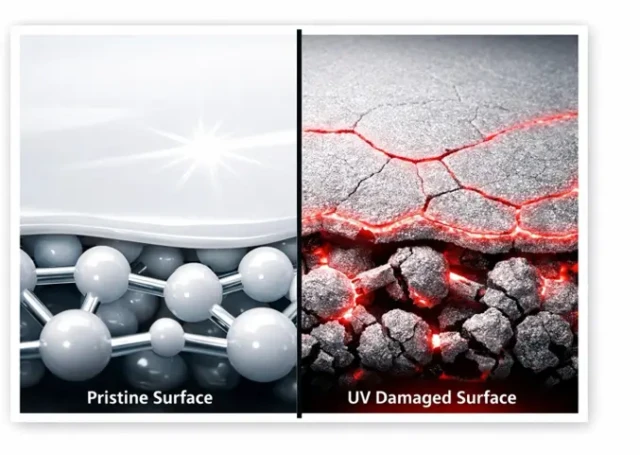
The science behind UV degradation is straightforward and brutal. Every minute your RV sits exposed to the Florida sun, ultraviolet rays penetrate the clear coat and begin breaking down the molecular bonds in your paint or gel coat. This process, known as oxidation, does not happen overnight, but it happens every single day. The result is a surface that gradually loses its luster, fades in color, and develops that characteristic chalky texture that signals permanent damage. What many RV owners fail to realize is that once oxidation takes hold, no amount of washing or waxing can reverse it. The damage becomes structural, requiring expensive paint correction or complete refinishing to restore the original appearance.
In the Florida Keys specifically, the intensity of solar radiation exceeds that of most other regions in the continental United States. The tropical latitude means the sun strikes at a more direct angle, delivering maximum energy to exposed surfaces. For high-end motorhomes from manufacturers like Prevost, Newmar, and Airstream, this presents a particular challenge. These luxury rigs feature premium finishes that command premium resale values, but those finishes are only as valuable as their condition. A Prevost with sun-damaged paint loses tens of thousands in resale value. An Airstream with oxidized aluminum loses the mirror-like finish that defines the brand. The financial implications of leaving these surfaces unprotected extend far beyond aesthetics.
Salt air introduces an entirely different dimension of threat. The Florida Keys sit surrounded by ocean water, and the constant breeze carries microscopic salt particles that settle on every exposed surface. Unlike rainwater that eventually evaporates and leaves minimal residue, saltwater leaves behind concentrated sodium chloride crystals. These crystals are hygroscopic, meaning they actively pull moisture from the humid air. This creates a perpetual cycle where salt deposits remain moist and chemically active, continuously attacking the surface beneath them. The result is corrosion that works its way through clear coats, paint layers, and ultimately into the substrate material itself.
The real danger emerges when UV radiation and salt exposure work in tandem. The tropical sun does not simply damage the surface; it accelerates the corrosive action of salt deposits by heating them and driving chemical reactions faster. Salt that lands on a surface in the morning becomes baked into the finish by afternoon. This heat-accelerated bonding creates a situation where salt crystals effectively weld themselves to the clear coat, making removal difficult even with professional-grade cleaning methods. Over time, this baked-on contamination creates permanent etching and pitting that no polishing compound can eliminate. The surface becomes permanently compromised, and the only remedy is complete refinishing.
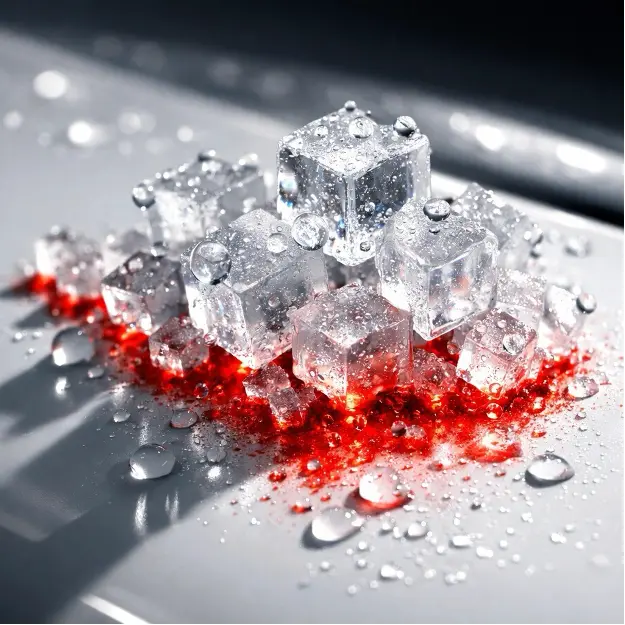
Traditional protection methods fail comprehensively in this environment. Standard automotive wax, which offers minimal protection under ideal conditions, breaks down in weeks when exposed to the Keys’ climate. The organic compounds in wax simply cannot withstand sustained UV bombardment and salt exposure. Synthetic sealants perform marginally better, lasting perhaps a few months before degrading, but they still require constant reapplication and provide inconsistent protection. Neither wax nor sealant creates a barrier strong enough to prevent salt penetration or UV damage. They represent temporary cosmetic enhancements rather than genuine protective solutions.
This is where Liquid Armour ceramic coating fundamentally changes the equation. Unlike organic waxes or polymer sealants, Liquid Armour and LA Ti coatings create a permanent chemical bond with the surface at the molecular level. The result is a protective layer that does not wash off, does not degrade under UV exposure, and provides a genuine barrier against salt intrusion. The coating’s 9H hardness rating means it resists scratching and abrasion far more effectively than any clear coat. More importantly, it creates a hydrophobic surface that causes water and salt spray to bead and roll off rather than settling and evaporating into concentrated deposits.
The five-plus years of protection offered by professionally applied Liquid Armour represent real-world durability. This is not marketing hyperbole but rather the result of advanced ceramic nanotechnology that creates a semi-permanent shield. The coating does not break down the way organic products do because it consists of inorganic ceramic particles suspended in a carrier solution. Once cured, these particles form a dense, cross-linked matrix that becomes an integral part of the surface. UV rays that would destroy wax in days have no effect on this ceramic layer. Salt that would corrode unprotected paint simply slides off the ultra-smooth, non-porous surface.
For owners of luxury motorhomes in the Florida Keys, the investment in ceramic coating is not optional; it is fundamental maintenance. A Prevost or Newmar represents a six or seven-figure asset that requires protection commensurate with its value. The Leoserve approach to ceramic coating application reflects this understanding. With more than fifteen years of experience serving the Keys, the team brings both technical expertise and familiarity with the specific challenges of the local environment. Every application is meticulously hand-crafted, using premium products from manufacturers like Sonax and Rupes to ensure proper surface preparation before coating application.
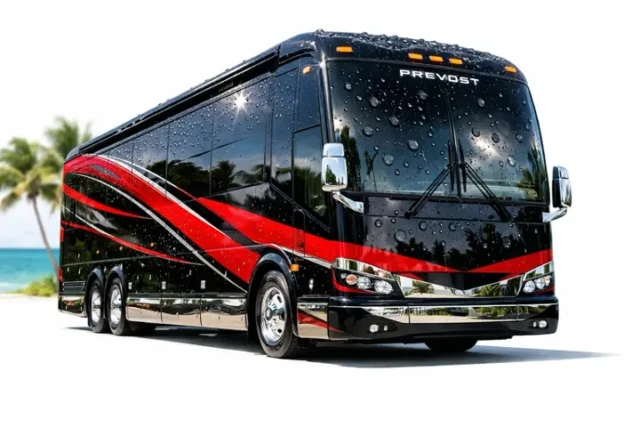
The exterior-only focus of Leoserve’s service ensures that every aspect of the vehicle’s exposed surfaces receives professional attention. This includes not just the painted or gel-coated body panels, but the complete exterior envelope that faces environmental assault. The mobile service model brings professional-grade equipment directly to your location, eliminating the need to drive your motorhome to a shop and wait days for completion. Serving from Key West to Key Largo, the team arrives with everything needed to properly prep and coat your RV’s exterior, ensuring consistent results regardless of location.
Understanding that complete exterior protection extends beyond just paint protection, Leoserve integrates window cleaning as part of the total exterior care package. Clear, streak-free windows complement the mirror-like finish of ceramic-coated paint, creating a cohesive appearance that showcases the vehicle’s premium status. The combination of protected paint surfaces and crystal-clear glass demonstrates attention to detail that separates professional service from basic maintenance.
The question posed by this article’s title has a definitive answer: yes, you absolutely need ceramic coating in the Florida Keys if you intend to preserve your RV’s appearance and value. The alternative is watching your investment systematically degrade under environmental assault that never stops.
Oxidation continues whether you use the vehicle daily or it sits in storage. Salt deposits accumulate whether you drive coastal roads or park inland. The only effective defense is a protective barrier engineered to withstand these specific threats, and that means professional-grade ceramic coating applied by experienced technicians who understand the unique demands of the tropical marine environment.
The financial calculus is straightforward. Ceramic coating represents a one-time investment that protects a much larger asset for years. Paint correction or refinishing to repair UV and salt damage costs significantly more and must be repeated whenever the damage recurs. The depreciation impact of visible exterior degradation dwarfs the cost of preventive protection. For luxury RV owners who understand asset management, ceramic coating is not an expense but rather insurance against far greater costs down the line.
Protect your investment with professional Liquid Armour ceramic coating designed specifically for the harsh Florida Keys environment. Whether you own a Prevost, Newmar, Airstream, or any high-end motorhome, Leoserve delivers the expertise and premium products necessary to shield your exterior from UV damage and salt corrosion. Call 305-501-8681 or email info@leoserveclean- ing.com to discuss your specific needs. Schedule your ceramic coating consultation today and ensure your RV receives the protection it deserves. Serving from Key West to Key Largo, we bring professional mobile service directly to your location with the quality and attention to detail that luxury vehicles demand.