Key Takeaways
- Liquid Armour LA Ti uses titanium dioxide (TiO₂) + silicon dioxide — standard ceramics use SiO₂ only.
- In the Florida Keys, LA Ti lasts 3–5 years vs. 1–2 years for standard ceramic.
- LA Ti’s photocatalytic UV protection actively breaks down salt and organic contaminants.
- LeoServe applies both products mobile — we come to you anywhere from Key West to Key Largo.
- For high-value RVs parked in the Keys, LA Ti is almost always the right investment.
If you’re considering ceramic coating for your RV in the Florida Keys, you’ve likely encountered two distinct options: a standard SiO₂ ceramic coating and Liquid Armour LA Ti, the titanium-infused product LeoServe uses for clients who need maximum protection in a marine coastal environment.
They’re not the same product, and the choice between them has real consequences for how long your RV’s exterior holds up.
This guide breaks down exactly what differentiates them — the chemistry, the real-world performance in Keys conditions, and how to decide which is right for your rig.
What Is Ceramic Coating — and What Does “Standard” Mean?
Ceramic coatings are liquid polymer formulations that bond chemically to your vehicle’s exterior surface, creating a semi-permanent protective shell.
Unlike wax — which sits on top of paint and washes off within weeks — a ceramic coating bonds at a molecular level, creating a hard, hydrophobic surface that repels water, salt, UV rays, and light contaminants.
“Standard” ceramic refers to the broad category of SiO₂, or silicon dioxide, based coatings:
- Hardness ratings between 8H and 9H on the pencil hardness scale
- Hydrophobic contact angles of around 100–110 degrees
- UV protection sufficient for moderate climates
- Lifespan of 1–3 years depending on conditions and maintenance
Standard ceramics are a significant upgrade over wax — but in the Florida Keys, their performance ceiling is lower than owners often expect.
What Is Liquid Armour LA Ti?
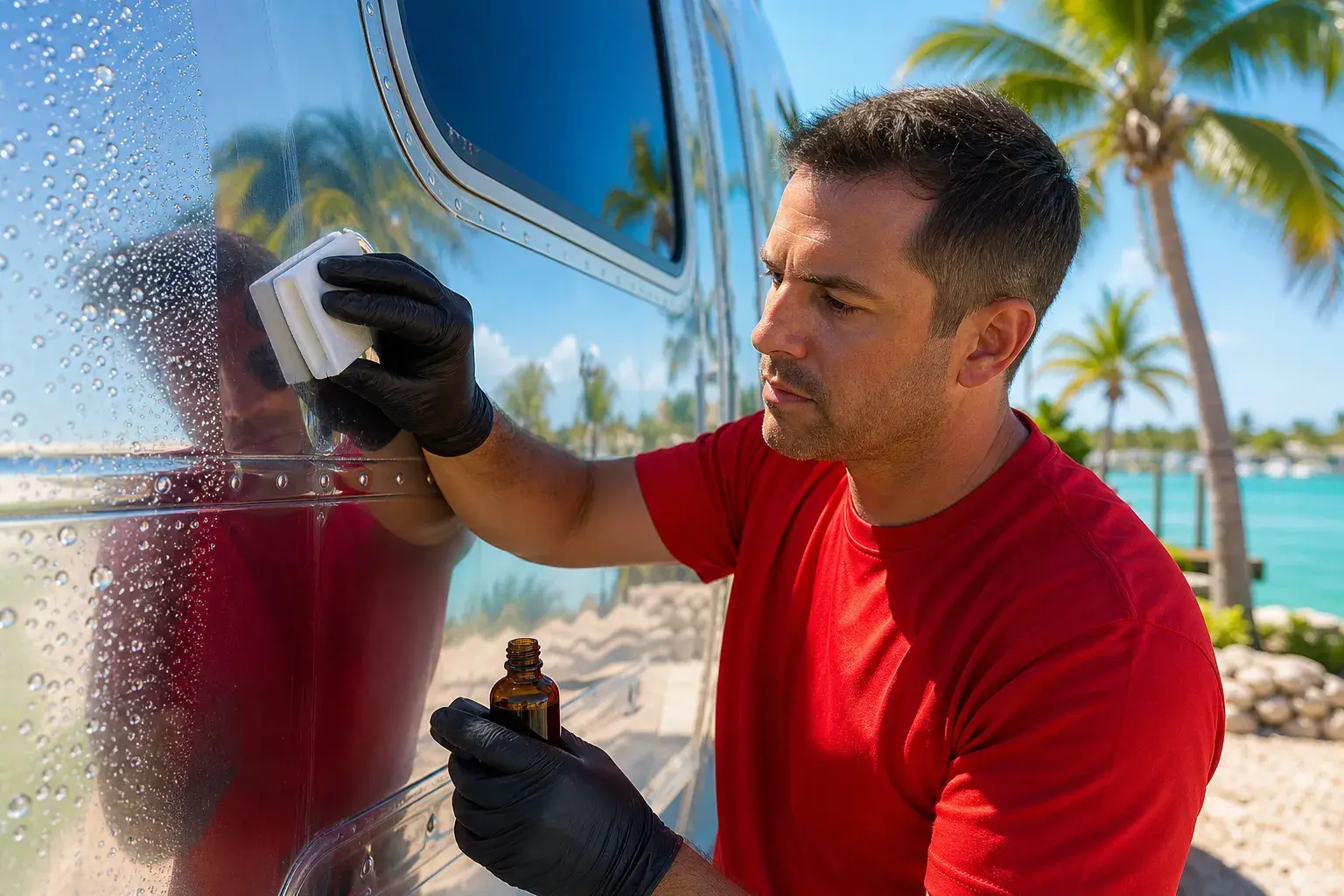
Liquid Armour LA Ti is a titanium-infused ceramic coating specifically engineered for RVs and larger specialty vehicles.
The “Ti” designation indicates the addition of titanium dioxide, or TiO₂, alongside silicon dioxide — and that distinction matters significantly in a marine coastal environment.
Titanium dioxide adds two properties standard SiO₂ ceramics lack:
Photocatalytic UV Decomposition
TiO₂ actively breaks down organic contaminants when exposed to UV light. In the Keys, where UV is relentless, this means the coating is continuously self-cleaning rather than simply deflecting UV passively.
Enhanced Surface Hardness
Titanium’s inclusion raises the effective hardness of the cured coating, improving resistance to micro-abrasions from salt crystals, airborne debris, and light contact damage.
LA Ti vs. Standard Ceramic: Side-by-Side
| Feature | Standard Ceramic | Liquid Armour LA Ti |
|---|---|---|
| Core Formula | SiO₂ only | SiO₂ + TiO₂ titanium |
| Surface Hardness | 8H–9H | 9H+ enhanced |
| UV Protection | Passive blocking | Active photocatalytic |
| Salt Air Resistance | Good | Excellent |
| Hydrophobic Angle | Around 100–110° | Around 115–120° |
| Lifespan in the Florida Keys | 1–2 years | 3–5 years |
| Self-Cleaning Effect | No | Yes, UV-activated |
| Best For | Mild climates, budget-conscious owners | Coastal, high-UV, premium RVs |
Which Coating Is Right for Your RV?
Choose Liquid Armour LA Ti if:
- Your RV is a Class A motorhome, Airstream, Prevost coach, or any high-value unit worth $80,000+
- You park, store, or full-time in the Florida Keys — Key West through Key Largo
- You want protection that genuinely lasts 3–5 years without reapplication
- You want the lowest possible maintenance burden between professional washes
- Your RV sits exposed to the ocean breeze at a marina, waterfront campsite, or island lot
Standard ceramic may work if:
- Your RV is a lower-cost travel trailer where coating budget is a constraint
- You’re only in the Keys seasonally and store elsewhere during off-season
- You’re comfortable with a reapplication cycle every 1–2 years
Even for seasonal visitors, we often recommend LA Ti.
The Florida Keys is one of the harshest environments for vehicle exteriors in the continental U.S. The premium over standard ceramic is modest compared to the cost of paint correction or fiberglass restoration when a lesser coating fails prematurely.
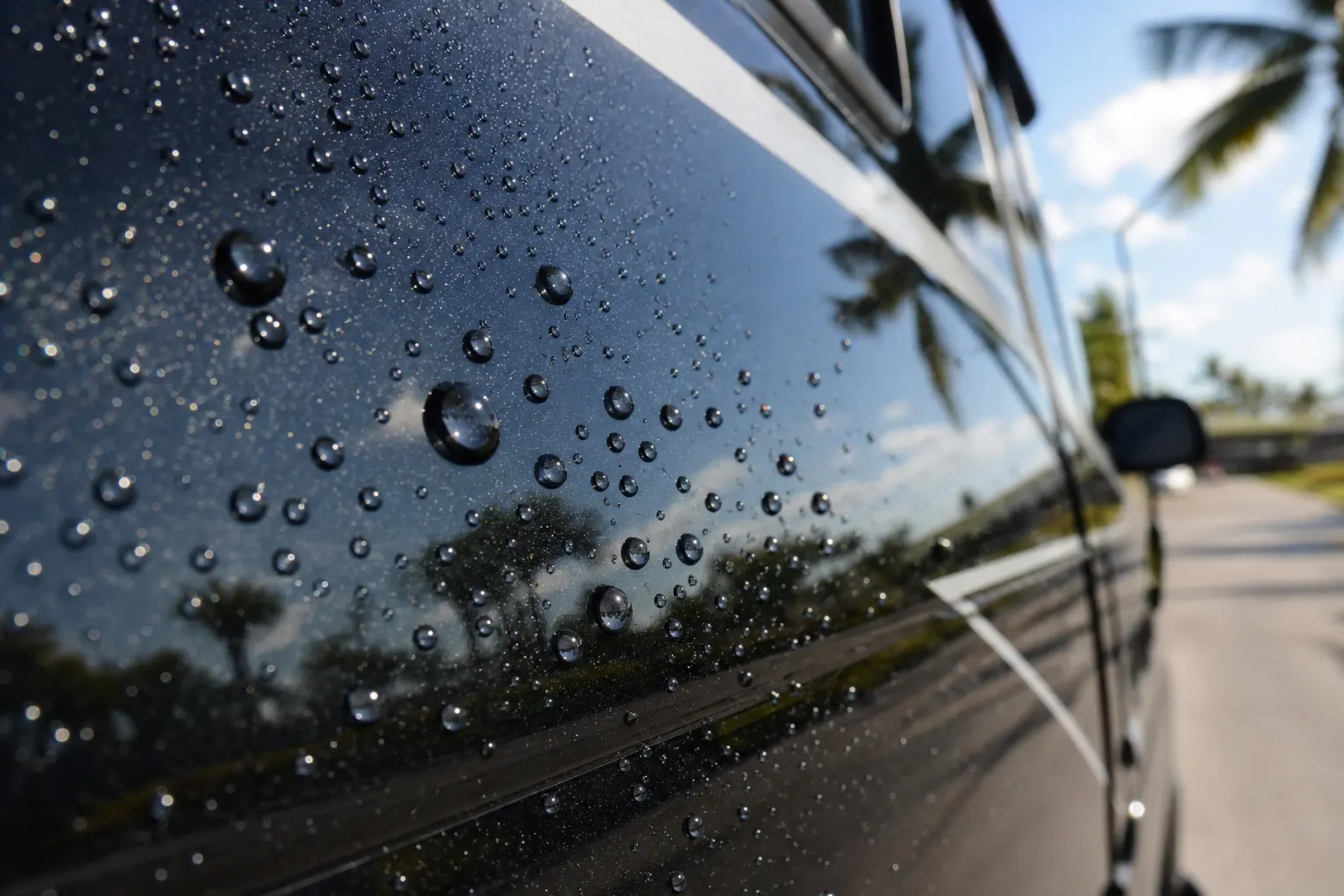
How LeoServe Applies Ceramic Coating to RVs
Whether we’re applying Liquid Armour LA Ti or a standard ceramic, preparation is where most of the quality lives.
Our mobile RV coating process for Florida Keys clients includes:
1. Hand Rinse
We thoroughly rinse the RV exterior to remove loose salt deposits and surface debris.
2. Wash With Soft Bristle Brushes and Wool Pads
Every brush and pad is inspected before and after each wash. No foam cannon — we control the wash process precisely.
3. Deionized DI Water Rinse
DI water has had all minerals removed. It evaporates completely clean, leaving zero water spots or mineral residue.
We never use fresh tap water, which deposits minerals that bake into surfaces under Keys sun.
4. Surface Inspection and Decontamination
We inspect for oxidation, etching, and surface defects that would prevent the coating from bonding correctly.
5. Coating Application
The coating is applied in controlled passes, panel by panel, ensuring even coverage and correct flash times.
All services are mobile — our red-and-white trucks come to you, whether you’re at a Keys campground, a marina, a residential lot in Marathon, or private property in Islamorada.
Maintaining Your Coating in the Florida Keys
- Wash frequency: Every 6–8 weeks — more often if parked directly on the water or near mangroves.
- Always use DI water: Tap or hose water degrades the coating’s hydrophobic properties over time.
- Avoid high-pH or acidic detergents: They break down the ceramic bond.
- Annual inspection: Check for thin spots, etching, or areas needing spot reapplication.
Frequently Asked Questions
What is Liquid Armour LA Ti?
Liquid Armour LA Ti is a titanium-infused ceramic coating formulated for RVs and large vehicles.
It provides enhanced hardness, UV protection, and hydrophobic properties compared to standard ceramics — especially in harsh coastal environments like the Florida Keys.
How long does Liquid Armour LA Ti last on an RV in the Florida Keys?
With constant salt air, intense UV, and high humidity, Liquid Armour LA Ti typically lasts 3–5 years on an RV exterior when properly applied and maintained.
Standard ceramic coatings in the same conditions usually provide 1–2 years of effective protection.
Is ceramic coating worth it for an RV I only use seasonally?
Yes — especially if your RV is stored in the Florida Keys or parked near water during off-season.
Salt air and UV cause oxidation and paint damage even when the vehicle isn’t in use. Ceramic coating protects the surface year-round with minimal maintenance.
Can Liquid Armour LA Ti be applied to any RV type?
Yes. It works on all common RV exterior materials — fiberglass, gel coat, aluminum siding, and painted surfaces.
It is suitable for Class A motorhomes, Class C coaches, fifth wheels, travel trailers, and specialty vehicles like Airstreams.
How do I maintain my RV after ceramic coating in the Florida Keys?
Schedule professional washes every 6–8 weeks.
LeoServe uses deionized DI water to prevent mineral deposits, preserving your coating’s hydrophobic properties and extending its lifespan.
Ready to Protect Your RV with Liquid Armour LA Ti?
Our team services the entire Florida Keys — Key West to Key Largo, including Stock Island, Big Pine Key, Marathon, Duck Key, Islamorada, Tavernier, and every stop in between.
We come to you.
Call: 305-501-8681
Website: leoservecleaning.com
Hours: Monday–Sunday, 8:00 AM – 6:00 PM
Written by the LeoServe Cleaning Team — specialists in premium mobile exterior detailing and ceramic coating across the Florida Keys, bringing professional-grade care directly to your door from Key West to Key Largo.