
An RV spends more of its life exposed than most cars. It sits higher, carries more flat surface area, and collects a steady mix of salt air, tropical dust, road film, tree debris, and sun exposure. In the Florida Keys, that combination can make a motorhome look tired far sooner than its mileage would suggest.
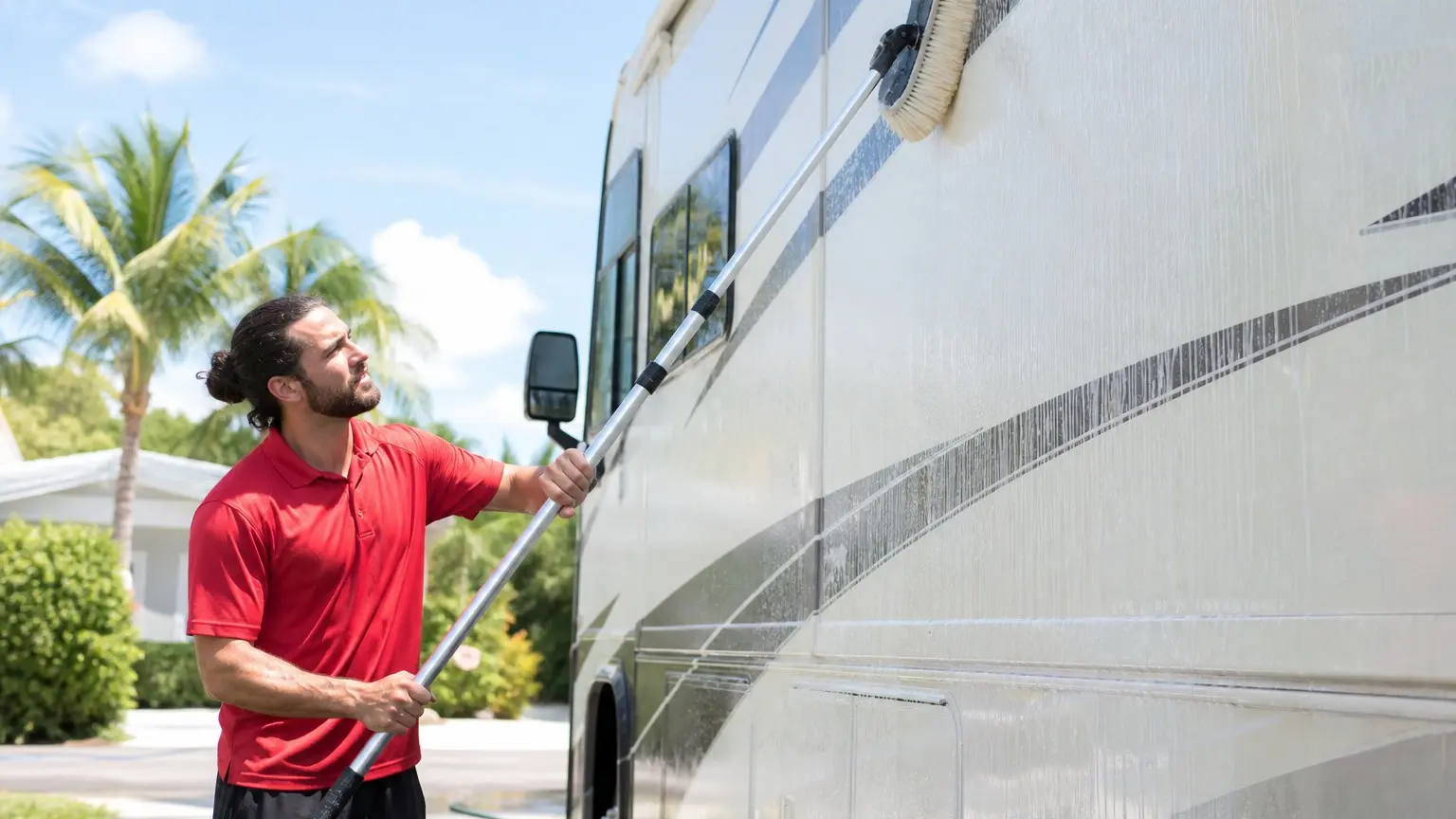
A proper RV wash is not simply a larger car wash. The vehicle materials, height, seams, awnings, windows, roof edges, and gel-coat or painted surfaces all call for a more deliberate process. That includes one important distinction: a soft wash brush or wool wash pad can be a sensible tool for the broad exterior panels of an RV, while a brush should not be used on car paint.
For owners looking for RV washing in the Florida Keys, the goal is straightforward: remove grime without creating the swirl marks, water spots, or overlooked buildup that make a motorhome harder to maintain over time.
Why Florida Keys RVs Need a Different Wash Process
Salt is the ongoing concern. Even when an RV is parked away from the water, airborne salt can settle into window seals, around mirrors, on awning hardware, and along lower panels. Add intense UV exposure and sudden afternoon rain, and a rushed wash can leave behind mineral spotting or residue instead of a clean finish.
RV exteriors also create access challenges. A technician has to work safely around tall sidewalls, large windshields, slide-outs, vents, decals, and trim. The right process starts by loosening contaminants rather than scrubbing them across the surface.
That is why the wash sequence matters more than the speed of the appointment. A clean-looking RV can still have salt residue at seams, rail edges, and lower panels if those areas are not addressed methodically.
Start With a DI-Water Pre-Rinse, Not a Foam Cannon
Leoserve does not foam-cannon RVs. On a surface this large, foam can start drying before the technician ever reaches the far end of the vehicle, and in Florida Keys sun and heat that happens fast — a foam layer that dries on the panel causes more streaking and residue than it prevents.
Instead, the wash begins with a thorough pre-rinse using deionized (DI) water. DI water loosens salt, dust, and road film just as effectively as foam would, without the risk of drying on the surface before the technician can work it.
Once the pre-rinse is complete, the technician washes the RV section by section, working in overlapping passes from top to bottom. Overlapping each pass keeps every inch of the panel covered before it has a chance to dry, and it keeps a vehicle this size manageable from start to finish.
When a Soft Brush Is Appropriate—and When It Is Not
An RV has high, broad exterior panels that are difficult to reach with a mitt alone. On those surfaces, a clean, soft wash brush or wool wash pad, used correctly, can be appropriate. Whichever tool is used, it should be dedicated to the RV wash process, rinsed often, and kept free of grit. It is a practical way to safely reach the upper sidewalls and larger gel-coat areas.
Cars require a different rule. Leoserve’s car wash process uses a wool wash pad, mitt, or car-safe sponge—not a brush—so the paint receives gentler contact care. That distinction is intentional. What works for the scale and access needs of an RV is not automatically right for automotive paint.
For RV owners, the important question is not whether a brush is used at all. It is whether the brush or pad is clean, soft, used only on the right vehicle surfaces, and paired with enough lubrication and rinsing to prevent contamination from being dragged across the finish.
The DI-Water Finish Helps Prevent Water Spots
Florida Keys tap water can leave mineral deposits as it dries. On a large RV, those spots become especially noticeable on dark trim, windows, and glossy side panels.
Leoserve uses deionized (DI) water during the wash process and for the final rinse. DI water has dissolved minerals removed, so it dries much more cleanly than ordinary water. That means fewer visible spots and less residue left behind on glass, trim, and paint or gel-coat.
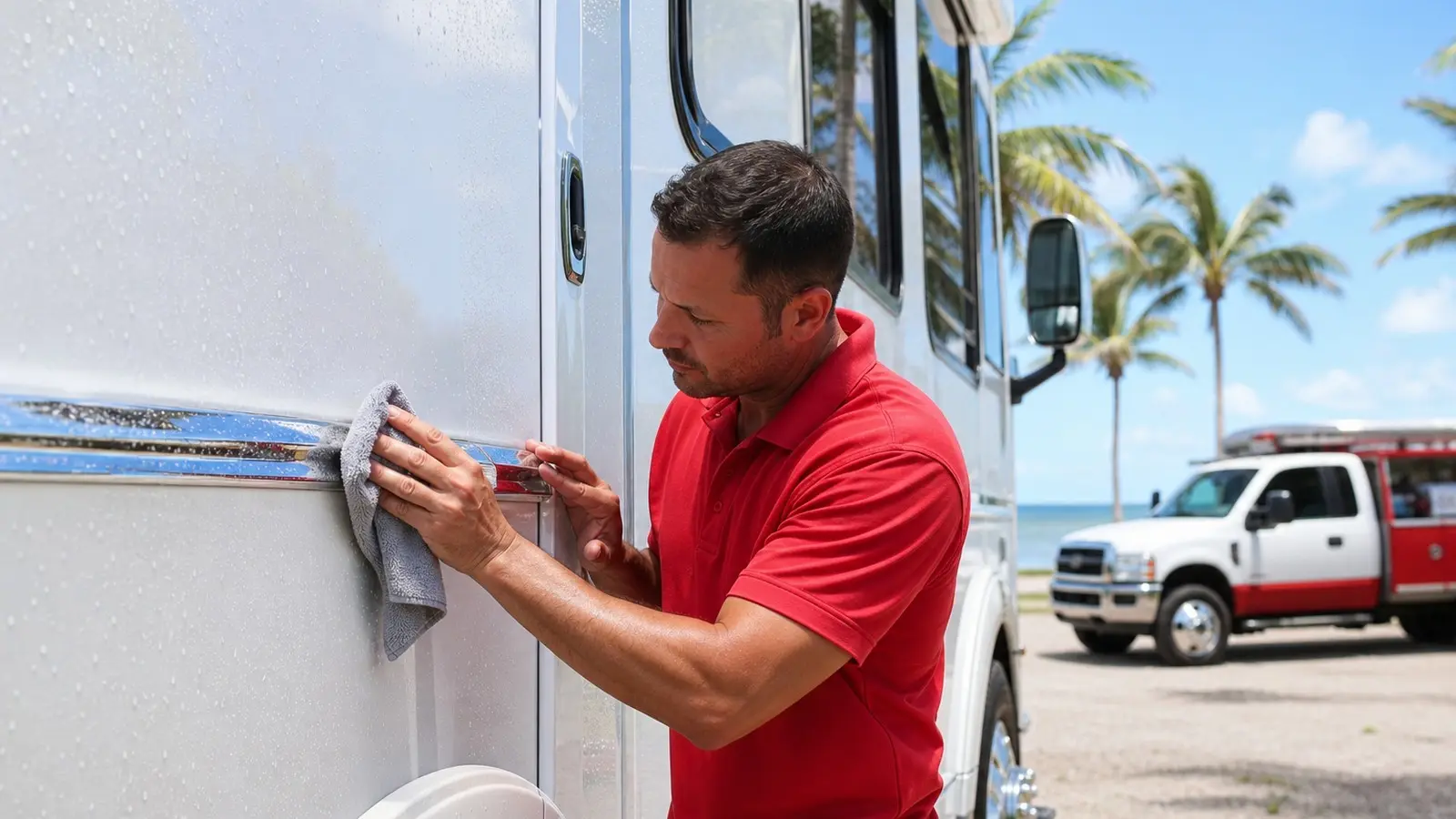
A spot-free final rinse is not just a cosmetic touch. It also reduces the amount of post-wash wiping needed on a large vehicle, which helps preserve the finish by limiting unnecessary contact.
Do Not Skip the Detail Areas
A quality RV wash should include more than the obvious large panels. The details make the difference:
- Window frames and rubber seals where salt and moisture can collect
- Awning arms, hardware, and drip rails
- Wheel areas and lower panels that pick up road film
- Mirrors, lights, and front-cap edges
- Exterior storage-door seams and trim transitions
These areas should be cleaned with the same care as the visible sidewalls. Rushing past them can leave the vehicle looking better from a distance while allowing buildup to remain in the places that need attention most.
A Practical Florida Keys RV Wash Schedule
There is no single schedule that fits every owner. An RV parked near open water, driven frequently, or stored outdoors will need attention sooner than one kept under cover. Still, a regular wash plan is easier and less expensive than waiting until oxidation, staining, or stubborn buildup becomes a restoration project.
As a practical baseline, inspect the exterior after extended trips, after heavy rain, and whenever salt spray or road film is visible. A routine maintenance wash keeps contaminants from sitting on the finish. For a more complete service plan—including exterior detailing and protective options—review Leoserve’s RV detailing service and Airstream care information.
If the RV has a protective coating, regular correct washing still matters. A coating can make maintenance easier, but it does not eliminate the need to remove salt and grime on a schedule.
Mobile RV Washing Across the Florida Keys
Leoserve brings the wash process to the vehicle, which is useful when moving a motorhome to a shop is inconvenient or impractical. The team can assess the condition of the exterior, recommend the appropriate wash and detail level, and work around the specific materials and access needs of the RV.
Whether your motorhome is parked in Key West, Stock Island, Marathon, or elsewhere in the Florida Keys, the goal is the same: a clean exterior handled with a process that respects the size and finish of the vehicle.
Ready to schedule RV washing in the Florida Keys? Contact Leoserve at 305-501-8681 or use the online booking form to request service.
Frequently Asked Questions
Can a brush be used on an RV?
Yes—Leoserve uses a clean, soft wash brush or a wool wash pad on RV exterior panels, worked in overlapping sections with proper soap and rinsing. Leoserve does not use a brush on car paint.
Why does my RV get water spots so quickly in the Keys?
Minerals in ordinary water can remain on the surface after evaporation, while salt air and strong sun make the residue more noticeable. A DI-water final rinse helps reduce those spots.
Do you foam-cannon RVs?
No. RVs are pre-rinsed with deionized (DI) water instead of foam. A motorhome’s surface area is large enough that foam can start drying before the wash is finished, especially in Florida Keys sun—and dried foam causes more streaking than it prevents. The DI-water pre-rinse loosens salt, dust, and road film just as effectively without that risk.
How often should I wash my RV in the Florida Keys?
The right frequency depends on where it is stored, how often it is driven, and how much salt and weather exposure it receives. A visual inspection after trips, storms, and heavy exposure is a sensible starting point.