
A tropical storm can leave a car looking rinsed by nature, but rain alone does not equal a safe wash. Wind can move sand, leaves, road film, and salty moisture across the vehicle. Puddles and traffic can add dirty spray to the rocker panels and wheel areas. Once the weather clears and the car is safe to approach, a deliberate wash helps remove that mixture before it dries into a stubborn film.
For Florida Keys car care after a tropical storm, the order matters. Leoserve uses deionized (DI) water through the car-wash process, applies soap with a foam cannon, and hand-washes automotive paint with a wool wash pad or car-safe sponge. Brushes are reserved for RV work and should not be used on car paint.
Quick Summary
- Wait until conditions are safe and inspect the car before washing.
- Remove loose debris without rubbing it across the paint.
- Use a DI-water pre-rinse, foam-cannon soap, and a gentle wool pad or car-safe sponge.
- Finish with DI water and inspect lower panels, wheel areas, glass, trim, and seams.
- If the vehicle encountered floodwater or has mechanical or electrical symptoms, stop and consult the appropriate repair professional before detailing.
Why Post-Storm Residue Needs a Careful Wash
Florida Keys storms combine heavy rain with wind, humidity, airborne salt, plant debris, and runoff. The visible leaves are only part of the problem. Fine grit can remain on horizontal panels, while dirty spray collects behind the wheels and along the lower doors. Wiping those surfaces dry before rinsing can drag contamination across the finish.
Strong sun often returns quickly after a storm. That can bake remaining water and residue onto glass, trim, and paint. A methodical wash is less about chasing a perfect shine immediately and more about removing loose and bonded grime without adding avoidable scratches or water spots.
Before You Wash: Make Safety the First Check
Do not begin while lightning, strong wind, standing-water hazards, or falling debris remain a concern. Once the area is safe, walk around the vehicle before touching the paint. Look for branches, sharp debris, loose trim, damaged glass, or anything caught near the wipers and seals.
If the vehicle was exposed to floodwater, do not treat that as an ordinary detailing job. Flood exposure can involve electrical, mechanical, brake, and contamination concerns that need the right specialist assessment. A safe exterior wash begins only after those risks are addressed.
Step 1: Remove Loose Debris and Pre-Rinse With DI Water
Start by lifting larger loose debris carefully rather than sweeping it across the surface. Then use a thorough DI-water pre-rinse from top to bottom. The rinse should carry away sand, grit, leaves, and road splash before any wash pad touches the car.
Pay extra attention to the windshield base, mirror edges, door handles, wheel openings, rocker panels, and the area behind each tire. These are common collection points after wet, windy conditions. The goal is to remove as much contamination as possible before contact washing begins.
Step 2: Use Foam-Cannon Soap to Loosen the Film
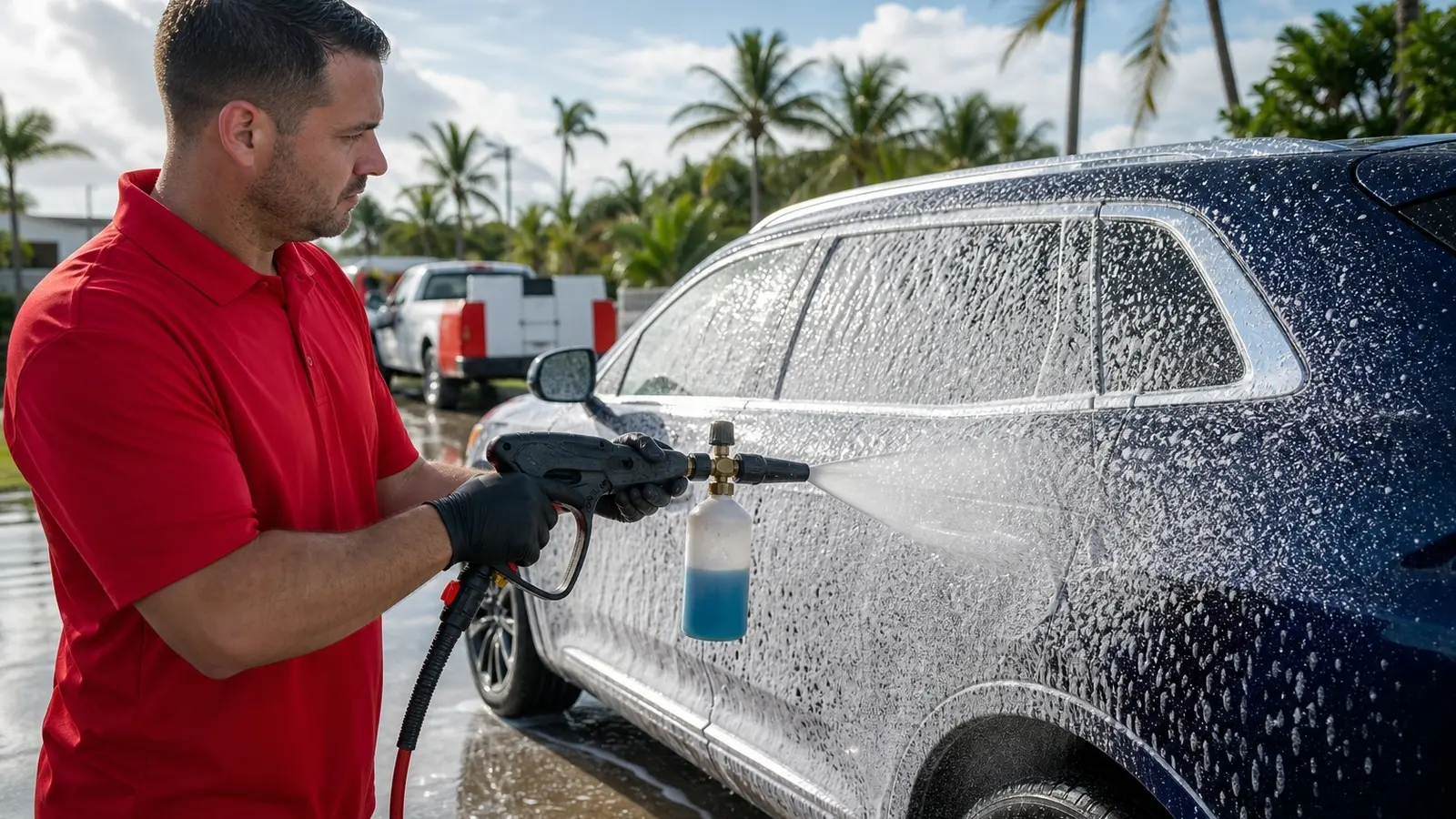
After the initial rinse, Leoserve applies soap with a foam cannon. The foam blankets the exterior and gives road film and storm residue time to loosen. That dwell time helps reduce the amount of rubbing needed during the hand-wash stage.
Work in manageable sections and avoid letting soap dry in direct tropical sun. The car should stay wet and lubricated as the wash moves from cleaner upper surfaces toward dirtier lower panels.
Step 3: Hand-Wash With a Wool Pad or Car-Safe Sponge
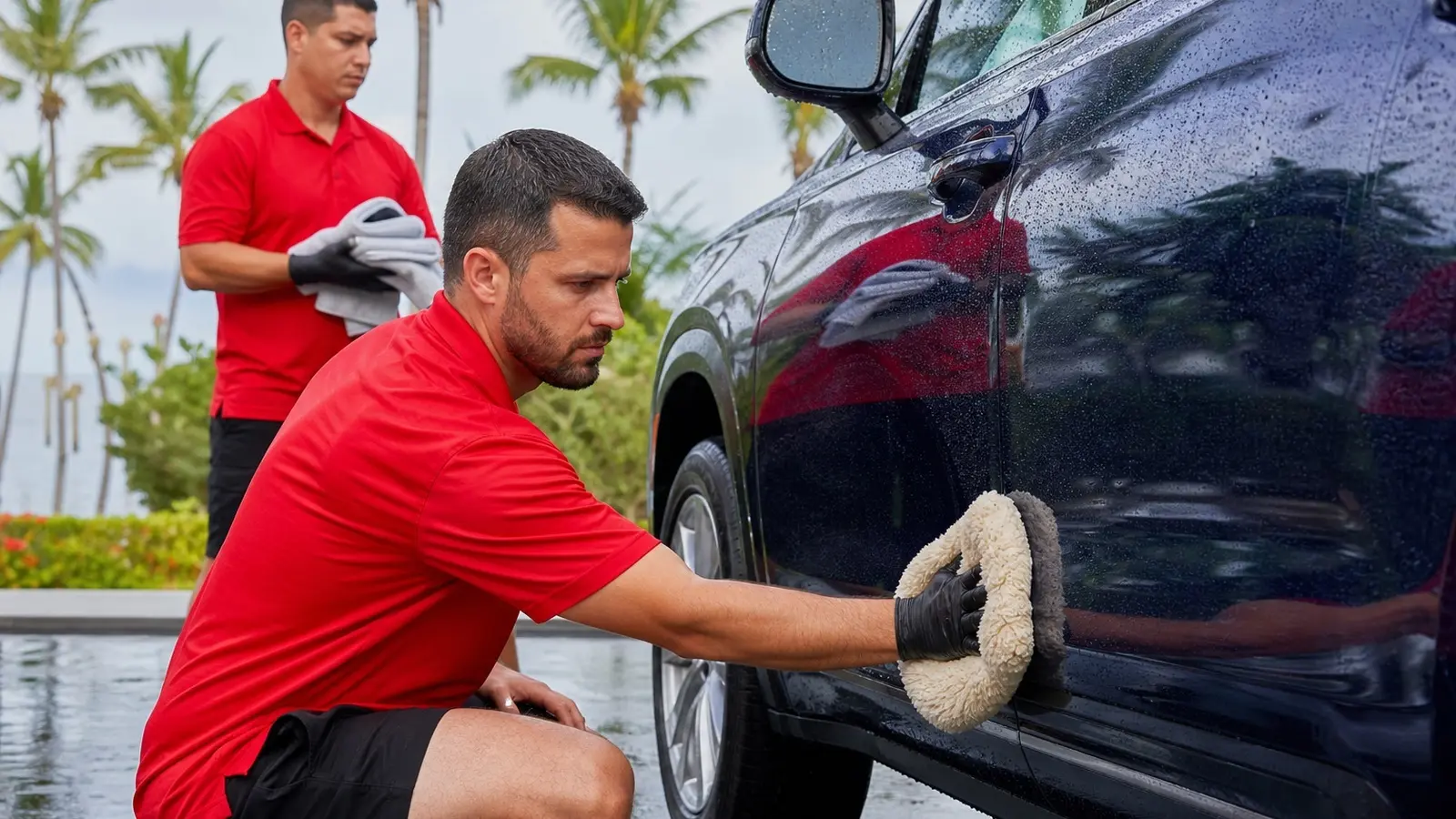
Cars need gentle contact tools. Leoserve hand-washes car paint with a clean wool wash pad, mitt, or car-safe sponge. A soft-bristle brush may be appropriate for the large exterior surfaces of an RV, but it is not part of the car-paint process.
Rinse the wash pad frequently and keep lower-panel contamination separate from cleaner upper areas. The rocker panels, bumpers, and wheel-adjacent surfaces usually carry the heaviest storm film, so they should be handled after the cleaner panels rather than first.
Step 4: DI-Water Final Rinse and a Detail-Area Check
A DI-water final rinse helps reduce the mineral residue that ordinary water can leave as it dries. That is especially useful in the Florida Keys, where heat can accelerate drying and make spots noticeable on dark paint, glass, and glossy trim.
After the rinse, inspect the windshield edges, mirrors, door seams, license-plate recess, wheel openings, and lower body panels. Storm residue often hides in transitions and crevices even when the broad panels look clean.
When a Full Detail Makes Sense
A post-storm wash removes fresh exterior contamination, but it does not replace a full interior and exterior detail. Sand tracked into carpets, damp floor mats, sunscreen residue, and humidity-related odors are separate interior concerns. Ceramic coating is also an exterior treatment; it does not clean or protect the cabin.
For cars without a biweekly or monthly maintenance service, Leoserve recommends a full detail every 3–4 months. A storm may move that timing forward if the vehicle accumulated heavy exterior grime or interior moisture, but the condition of the car should guide the decision.
Mobile Post-Storm Car Care Across the Florida Keys
Leoserve provides mobile car washing and detailing across the Florida Keys, with service based in Stock Island. A mobile appointment can help remove storm film at the vehicle’s location without sending it through a brush wash or asking the owner to move a dirty car farther than necessary.
Satisfied customers help other Florida Keys drivers find reliable post-storm car care. Visit the feedback page to leave a review for Leoserve on Facebook, Yelp, Google, or HomeAdvisor—whichever platform is easiest.
Review Leoserve’s car detailing service at https://leoservecleaning.com/services/car-detailing/ or contact Leoserve at 305-501-8681 through https://leoservecleaning.com/about/contacts/ to request an estimate.
Frequently Asked Questions
Does heavy rain wash salt off a car?
Rain may move some loose residue, but wind, road spray, sand, and airborne salt can leave a new film behind. A controlled rinse and wash is more reliable than assuming storm rain left the finish clean.
Can I wipe storm residue off with a dry towel?
That can drag fine grit across the paint. Remove loose debris first, rinse thoroughly, and use a lubricated hand-wash process instead of dry wiping dirty panels.
Should a brush be used after a storm?
Not on car paint. Leoserve uses a wool wash pad, mitt, or car-safe sponge for cars. Soft brushes are reserved for appropriate RV exterior surfaces.
Does ceramic coating eliminate post-storm washing?
No. Ceramic coating is a one-time exterior application that can make maintenance easier, but it does not stop salt, sand, and road film from landing on the vehicle. Correct washing and annual coating inspection still matter.