
An RV can look ready to park while still carrying a layer of salt film, insects, road grime, rain streaks, and moisture around its exterior details. In the Florida Keys, leaving that buildup in place can make the next wash more difficult and can hide areas that deserve inspection before the motorhome sits unused.
RV storage preparation in the Florida Keys should begin with a careful exterior wash, not a rushed final rinse. The goal is to clean broad panels and the smaller transition areas, finish with deionized (DI) water, allow the exterior to dry, and inspect seams, awning hardware, windows, and storage doors before parking.
Quick Summary
- Wash the RV before storage so salt film, road grime, insects, and rain streaks do not sit on the exterior.
- Start with a thorough rinse and foam-cannon soap to loosen contamination.
- Use RV-appropriate contact tools; a clean soft brush can be used on suitable broad RV panels, while car paint requires a wool pad or car-safe sponge.
- Use DI water for a cleaner final rinse and inspect windows, awning rails, seals, trim, and exterior compartment doors.
- Let the exterior drain and dry before closing the storage cycle, and follow the facility’s rules for hookups, covers, and parking.
Why Wash an RV Before Storage?
A motorhome has more exterior surface area and more transitions than a car. Tall sidewalls, the front cap, window frames, awning rails, trim, vents, slide-out edges, and lower storage compartments all collect different kinds of contamination. When an RV is driven through the Keys, the exterior can gather salt-laden moisture, road film, insects, and tropical debris in a single trip.
Parking the RV without washing can allow that mixture to dry in place. It can also make inspection harder because streaks and grime hide the condition of seals, trim, decals, and panel edges. Cleaning first creates a better baseline for spotting what may need attention before the vehicle sits.
Start With an Exterior Walkaround
Before water or soap is applied, walk around the RV and note the heaviest buildup. Check the front cap for insects and road film, the lower panels for spray, and the roofline and awning rail for leaves or visible debris. Look at window frames, mirrors, lights, trim transitions, and storage-door seams.
This is also the time to identify loose trim, damaged seals, open vents, or exterior accessories that should not be sprayed directly. An exterior wash is not a repair inspection, but a careful walk around helps the technician adjust the process to the actual vehicle.
Wash Sequence: Rinse, Foam, and RV-Safe Contact Cleaning
Begin with a thorough rinse to move loose debris off the surface. Work from the upper areas downward so grit and runoff do not repeatedly cross already-cleaned sections. The front cap, lower sidewalls, wheels, and areas behind the tires often need extra attention after a trip.
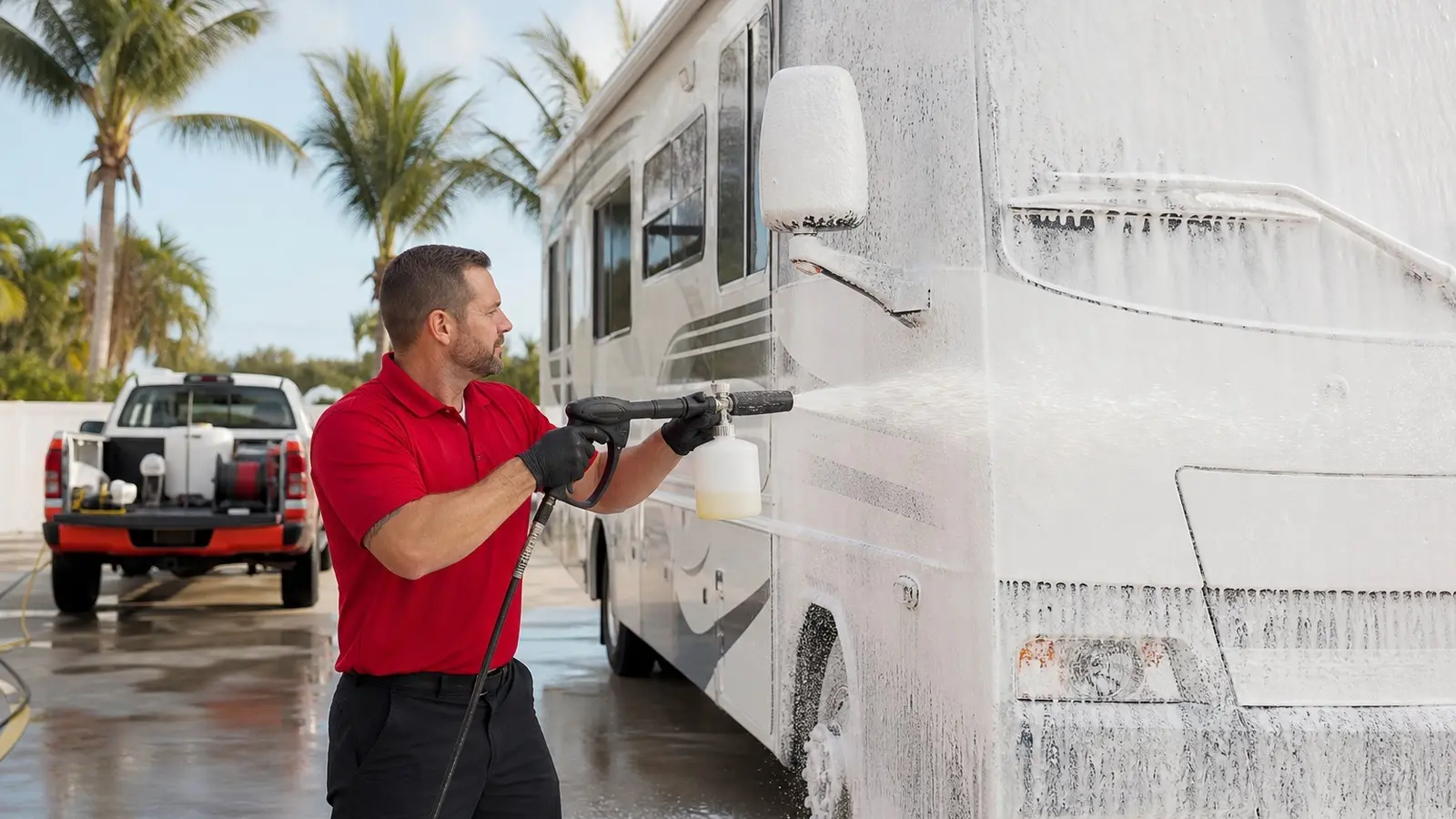
Next, apply soap with a foam cannon. The foam gives insects, road film, and organic residue time to loosen before contact washing. In Florida sun, the RV should be cleaned in manageable sections so soap does not dry on the exterior.
Because an RV has tall, broad panels, a clean soft wash brush can be appropriate on suitable RV surfaces when it is used with enough soap and rinsed often. That is an RV-specific rule. Leoserve does not use brushes on car paint; cars are hand-washed with a wool pad, mitt, or car-safe sponge.
Use DI Water for the Final Rinse
A large RV creates a lot of drying area. Ordinary rinse water can leave mineral residue on windows, dark trim, mirrors, and glossy panels as it evaporates. Leoserve uses DI water during the wash process and for the final rinse so the exterior dries with fewer visible spots.
A DI-water finish does not eliminate the need to inspect the RV. Water can remain around trim edges, awning hardware, mirrors, compartment doors, and other transitions. Give those areas time to drain and check them before the motorhome is parked.
Inspect Awning Rails, Windows, and Exterior Seams
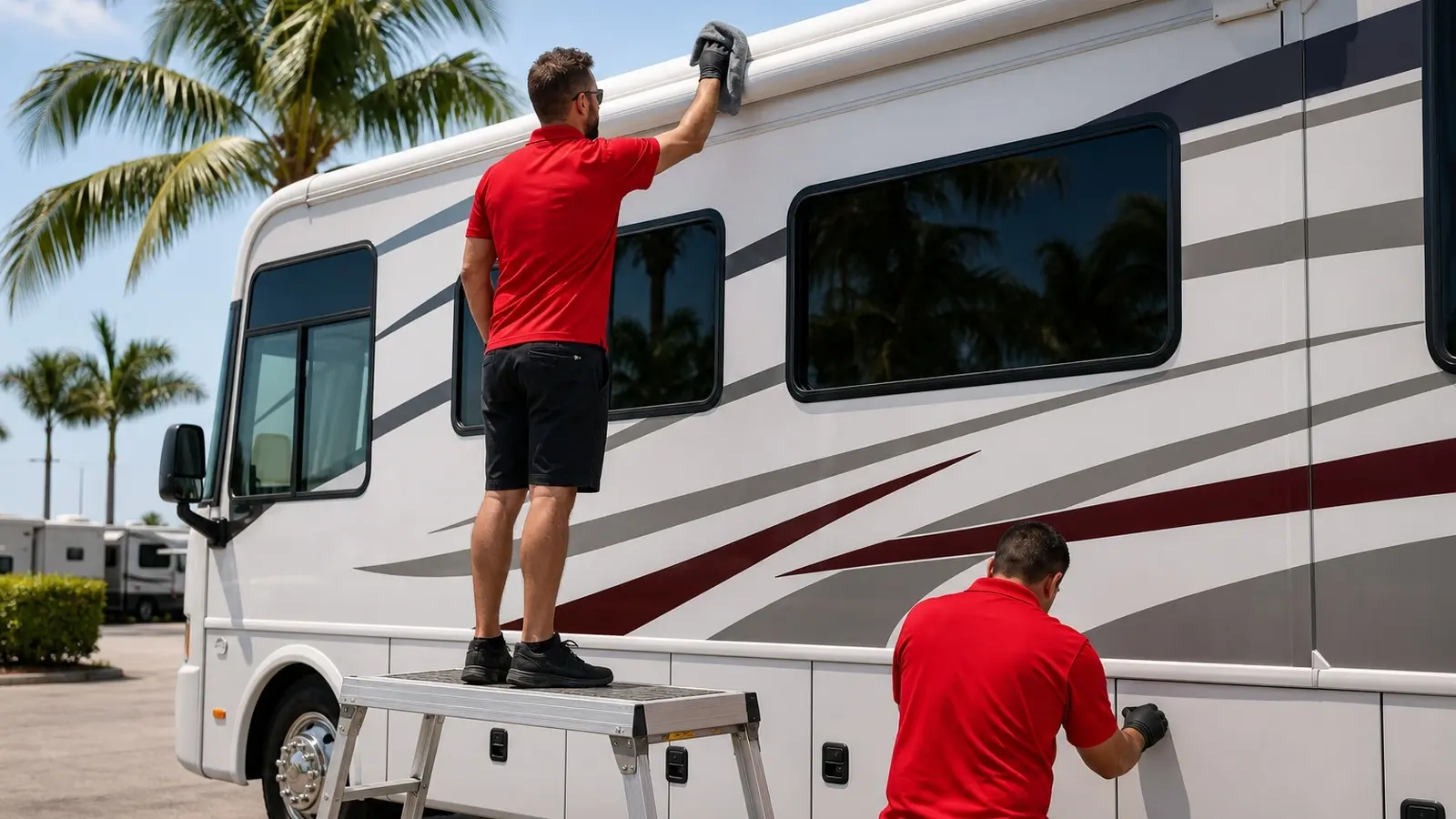
After washing, inspect the areas where broad panels meet hardware and openings. Window frames, rubber seals, awning arms and rails, exterior storage-door seams, lights, mirrors, and trim transitions deserve a close look. The aim is to confirm they are clean, free of trapped debris, and not holding obvious standing moisture.
Do not use the wash appointment as a reason to seal over a questionable area. If a seal, roof component, awning mechanism, or exterior fitting appears damaged, record it and have the correct RV service professional evaluate it. Cleaning should reveal maintenance needs, not conceal them.
What About Wax or Ceramic Coating Before Storage?
Protective products can make routine cleaning easier, but they are not substitutes for washing. If the RV already has a ceramic coating, it still needs correct maintenance to remove salt and grime. Leoserve treats ceramic coating as a one-time exterior application with an annual inspection—not an automatic yearly reapplication.
Whether a protective service is appropriate depends on the RV’s finish, current condition, storage arrangement, and the owner’s plans. The exterior should be clean and assessed before any coating recommendation is made.
Final Storage-Prep Checklist
- Loose debris removed before contact washing
- Front cap, sidewalls, lower panels, mirrors, lights, and wheels cleaned
- Window frames, awning rails, storage-door seams, and trim transitions checked
- DI-water final rinse completed
- Exterior given time to drain and dry
- Visible damage or questionable seals documented for the proper RV service professional
- Storage-facility rules for covers, hookups, and parking confirmed by the owner
Satisfied Florida Keys RV owners are welcome to leave a review for Leoserve after a storage-prep wash. The feedback page offers a quick choice between Facebook, Yelp, Google, and HomeAdvisor, so customers can pick whichever platform they already use.
Mobile RV Washing Across the Florida Keys
Leoserve provides mobile RV washing and detailing across the Florida Keys. Bringing the wash process to the motorhome can simplify pre-storage care, especially when moving a large vehicle through town or into a shop is inconvenient.
Review Leoserve’s mobile RV wash and detailing service at https://leoservecleaning.com/services/mobile-rv-wash-detailing/ or contact Leoserve at 305-501-8681 through https://leoservecleaning.com/about/contacts/ to request an estimate.
Frequently Asked Questions
Should an RV be washed immediately before storage?
It should be washed with enough time for the exterior, seams, and hardware areas to drain and dry before the storage cycle is closed. Avoid parking it while soap or obvious standing moisture remains.
Can Leoserve use a soft brush on an RV?
Yes, a clean soft wash brush can be appropriate on suitable broad RV exterior surfaces when used correctly. Brushes are reserved for RV work and are not used on car paint.
Does DI water matter on a motorhome?
Yes. An RV has a large surface area, and mineral residue can become visible on windows, mirrors, trim, and glossy panels. DI water helps the final rinse dry more cleanly.
Does ceramic coating mean the RV can be stored without washing?
No. A coating can support easier maintenance, but salt film, insects, and road grime still need to be removed. Correct washing remains part of exterior care.