
Key West heat can turn an ordinary car wash into a race against drying soap and rinse water. The best time to wash a car in Key West is when the paint is cool, direct sun is limited, and the technician has enough time to work methodically. Early morning is often the most practical window, but shade and panel temperature matter more than the clock alone.
Leoserve’s car-wash process uses deionized (DI) water for the pre-rinse, in the foam cannon, and for the final rinse. Soap is applied with a foam cannon, then the car is hand-washed with a wool wash pad, mitt, or car-safe sponge. Brushes are reserved for RV work and are not used on car paint.
Quick Summary
- Choose a time when the paint is cool and open shade is available.
- Avoid allowing foam-cannon soap or rinse water to dry on hot panels.
- Use DI water, foam-cannon soap, and a wool wash pad, mitt, or car-safe sponge.
- Never use an RV wash brush on car paint.
- Treat ceramic coating as one-time exterior protection with annual inspection—not permission to skip correct washing.
Why Wash Timing Matters in Key West
Direct tropical sun can heat paint, glass, and dark trim quickly. When soap lands on a hot surface, the working window becomes shorter. When rinse water evaporates before it can be managed, it can leave visible residue on glass, glossy trim, and dark paint. Good timing gives the wash process room to work instead of forcing rushed contact cleaning.
Timing also affects inspection. In softer morning light or open shade, it is easier to see salt film, insects, bird residue, lower-panel grime, and areas that need extra rinsing. A careful walkaround before washing helps separate ordinary contamination from chips, loose trim, or other conditions that may need a different kind of attention.
Early Morning Is Often the Easiest Window
Early morning often provides cooler panels and more usable shade than midday. That does not mean every car must be washed at sunrise. A shaded driveway, covered service area, or side of a property that remains out of direct sun can create a workable window later in the day. The correct question is whether the vehicle surface is cool enough for soap and rinse water to be controlled.
Before starting, touch-check representative painted and glass surfaces, confirm where the sun will move during the appointment, and plan the wash in manageable sections. If a panel is already hot, cooling and rechecking it is safer than beginning a contact wash immediately.
Why Midday Heat Makes Washing Harder
Around midday, direct sun can move across the hood, roof, trunk, mirrors, and windows while the wash is still in progress. Soap that dries before rinsing may require the section to be rewetted and cleaned again. Water that flashes off hot glass can also leave a visible pattern before the final rinse is complete.
A professional mobile wash should account for those conditions rather than simply working faster. Shade, smaller sections, controlled dwell time, frequent rinsing, and DI water all help, but none replaces correct contact tools. A brush is not a shortcut for car paint, regardless of the temperature.
The Leoserve Hot-Weather Wash Sequence
Leoserve begins with a DI-water pre-rinse to move loose sand, dust, salt film, and road spray away from the paint before contact. Extra attention goes to the lower panels, wheel-adjacent areas, mirror edges, windshield base, and other places where Florida Keys driving residue collects.
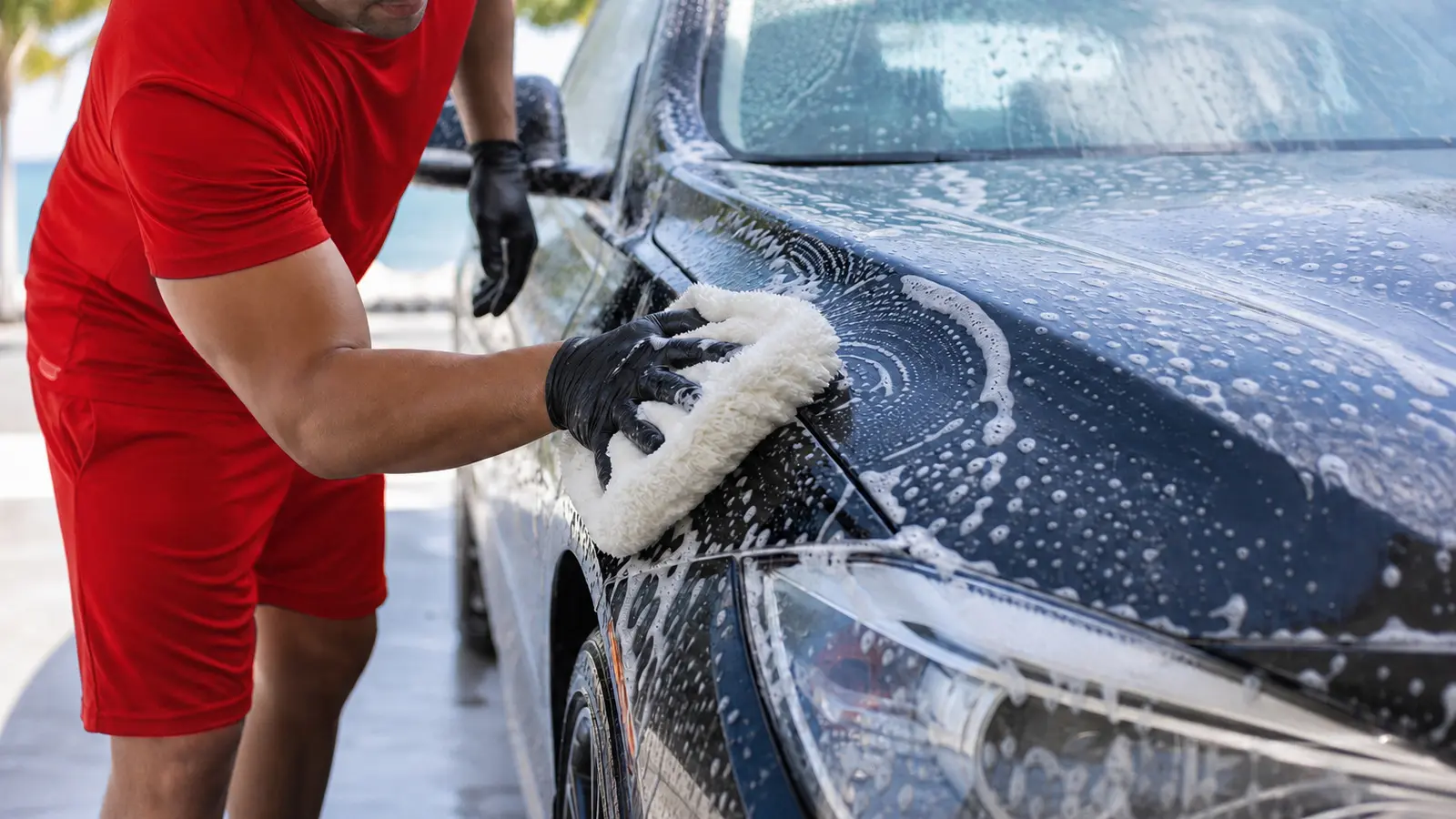
Next, foam-cannon soap is applied in sections that can be kept wet. The foam helps loosen the film and provides lubrication for the hand-wash stage. Car paint is then washed with a clean wool wash pad, mitt, or car-safe sponge. The wash media is rinsed frequently, and dirtier lower areas are handled after cleaner upper panels.
The process finishes with a DI-water rinse. DI water supports a cleaner drying result because it reduces the mineral residue ordinary water can leave behind. The final check covers glass, mirrors, seams, handles, trim, the license-plate recess, and lower body areas before the vehicle is considered complete.
Shade Helps, but It Does Not Replace the Right Process
Shade extends working time, but a shaded car can still hold heat from a recent drive. The hood, roof, brakes, wheels, and engine-adjacent panels may remain warm after the vehicle is parked. Giving the car time to cool is part of the wash plan, especially after highway driving through the Keys.
A shaded setting also does not make dry wiping safe. If the vehicle carries sand or salty film, wiping before a thorough rinse can move grit across the finish. The order remains the same: inspect, rinse, foam, gently hand-wash, rinse again, and check the details.
Ceramic Coating Changes Protection, Not Basic Wash Needs
Ceramic coating can support easier exterior maintenance, but it does not make a car self-cleaning. Salt, sand, insects, bird residue, and road film still land on the surface. A coated car still needs cool panels, suitable soap, gentle wash media, and a thorough rinse.
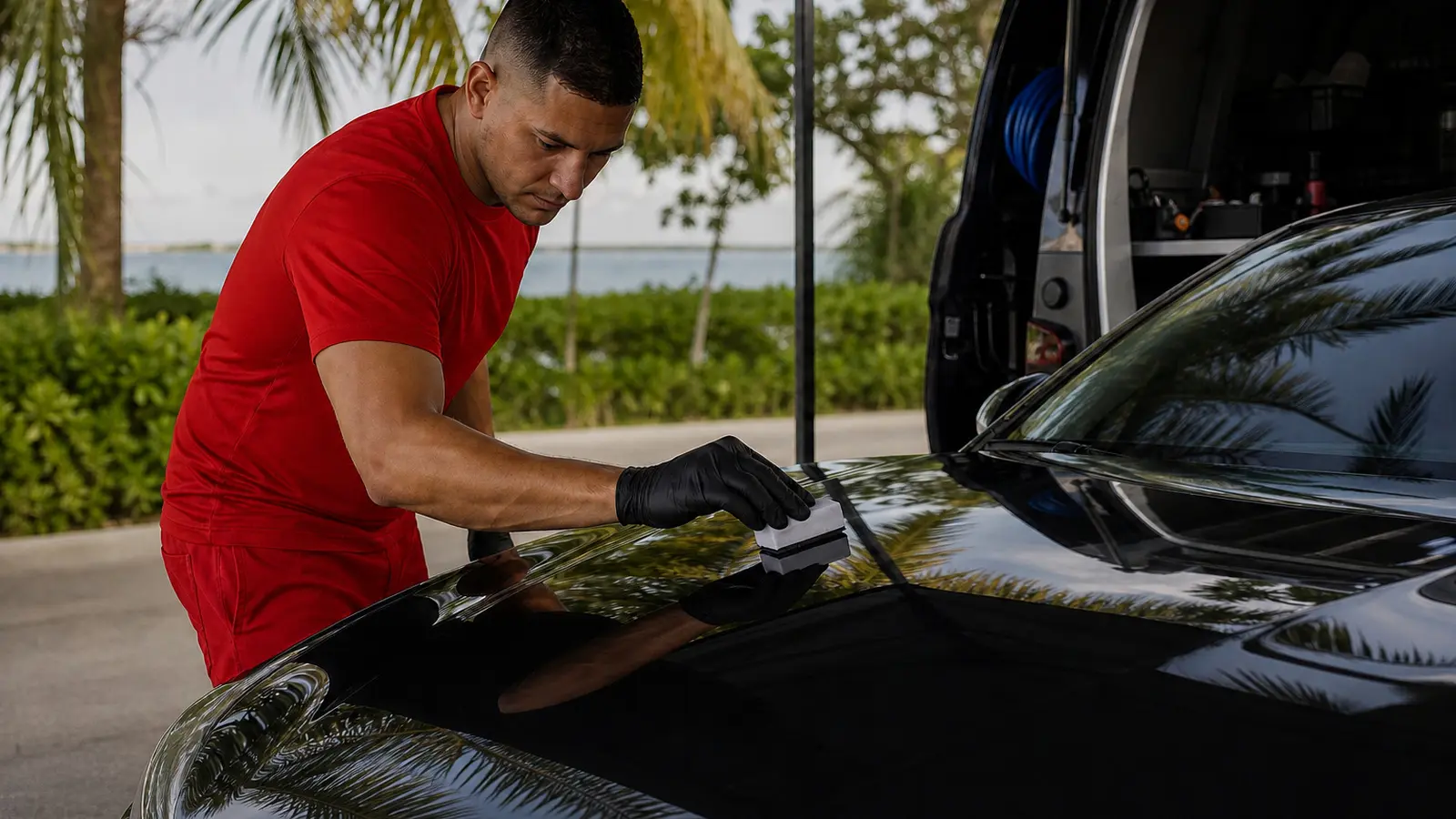
Leoserve treats ceramic coating as a one-time exterior application with annual inspection, not an automatic yearly reapplication. It protects exterior surfaces only and does not replace interior detailing. Review Leoserve’s ceramic coating service at https://leoservecleaning.com/ceramic-coating/ when evaluating long-term exterior protection.
When a Full Detail Makes Sense
A well-timed exterior wash removes current surface contamination, but it is not the same as a complete interior and exterior detail. Sand in the carpets, sunscreen residue, spills, humid cabin odors, and worn protection need separate attention. For cars without biweekly or monthly maintenance service, Leoserve recommends a full detail every 3–4 months.
The vehicle’s use still matters. A daily driver parked near the water, a car used for long Keys commutes, and a vehicle stored under cover will not collect contamination at the same rate. Regular inspection helps the owner choose the right service without inventing a one-size-fits-all maintenance plan.
Mobile Car Washing Across the Florida Keys
Leoserve provides mobile car washing and detailing across the Florida Keys from its Stock Island base. A mobile appointment allows the wash to be planned around the vehicle’s location, available shade, and current condition rather than sending the car through a brush wash.
Review Leoserve’s car detailing service at https://leoservecleaning.com/services/car-detailing/ or contact Leoserve at 305-501-8681 through https://leoservecleaning.com/about/contacts/ to request an estimate.
Frequently Asked Questions
What is the best time to wash a car in Key West?
Choose a time when the paint is cool and shade is available. Early morning is often easiest, but a cool shaded surface later in the day can also work. Panel temperature and direct sun matter more than a fixed clock time.
Can a car be washed in direct sun?
Direct sun shortens the time before soap and rinse water dry. If shade is unavailable, work should be limited to manageable sections and only after confirming the panels are cool enough. Waiting for better conditions may be the safer choice.
Does DI water eliminate the need to dry or inspect the car?
No. DI water helps reduce mineral residue, but the vehicle still needs a final check around mirrors, glass, seams, handles, trim, and lower panels where water and contamination can remain.
Should a soft brush be used on car paint if the soap is drying?
No. Leoserve uses wool wash pads, mitts, or car-safe sponges on car paint. Soft wash brushes are reserved for suitable RV exterior surfaces.