Bird droppings and insect residue are common on cars in the Florida Keys. Highway drives between keys, proximity to mangroves and waterways, and the outdoor environment mean that most cars pick up both types of contamination regularly. In the Florida Keys, the combination of intense UV and high temperatures means prompt removal matters more than in cooler or less sunny environments.
Leoserve’s approach to these contaminants on car paint follows the same sequence as any careful exterior wash: a DI-water soak to soften the dried material before contact cleaning, foam-cannon soap applied to the full exterior, and hand washing with a wool wash pad, mitt, or car-safe sponge. No brushes touch the car paint. The sequence is deliberate because the goal is to remove the contamination without the contact cleaning step dragging it across the surrounding paint.
Quick Summary
-
- Bird droppings and insect residue dry faster and bond more firmly in Florida Keys heat and UV than in cooler climates.
- Never scrape or dry-wipe dried droppings or insect residue from car paint; the material can contain particles abrasive enough to scratch the clear coat.
- A DI-water soak to soften the residue before any contact cleaning is the correct first step.
- Foam-cannon soap is applied to the full exterior after the soak, then the car is hand-washed with a wool wash pad, mitt, or car-safe sponge.
- Brushes are not used on car paint.
- Ceramic coating makes maintenance easier but does not prevent droppings or insect impacts from landing on the paint.
- Cars without regular maintenance service benefit from a full interior and exterior detail every 2–3 months.
Why Florida Keys Heat Makes Prompt Removal More Important
Bird droppings contain uric acid, and insect bodies contain proteins and acids from their biology and diet. In the Florida Keys, direct sun heats a car hood, roof, or trunk surface well above the ambient air temperature. That heat can accelerate the chemical interaction between acidic contamination and the car’s clear coat, making prompt removal more important than it would be in a shaded or cooler setting.
The result can be etch marks — areas where the clear coat has been softened or partially dissolved, leaving a visible dull spot or outline even after the dropping is removed. How quickly this happens depends on the paint condition, whether a protective coating is present, how much sun the surface receives, and how long the contamination sits undisturbed. A dropping left on a black roof in direct Florida Keys sun is under significantly more stress than the same dropping on a car parked in shade.
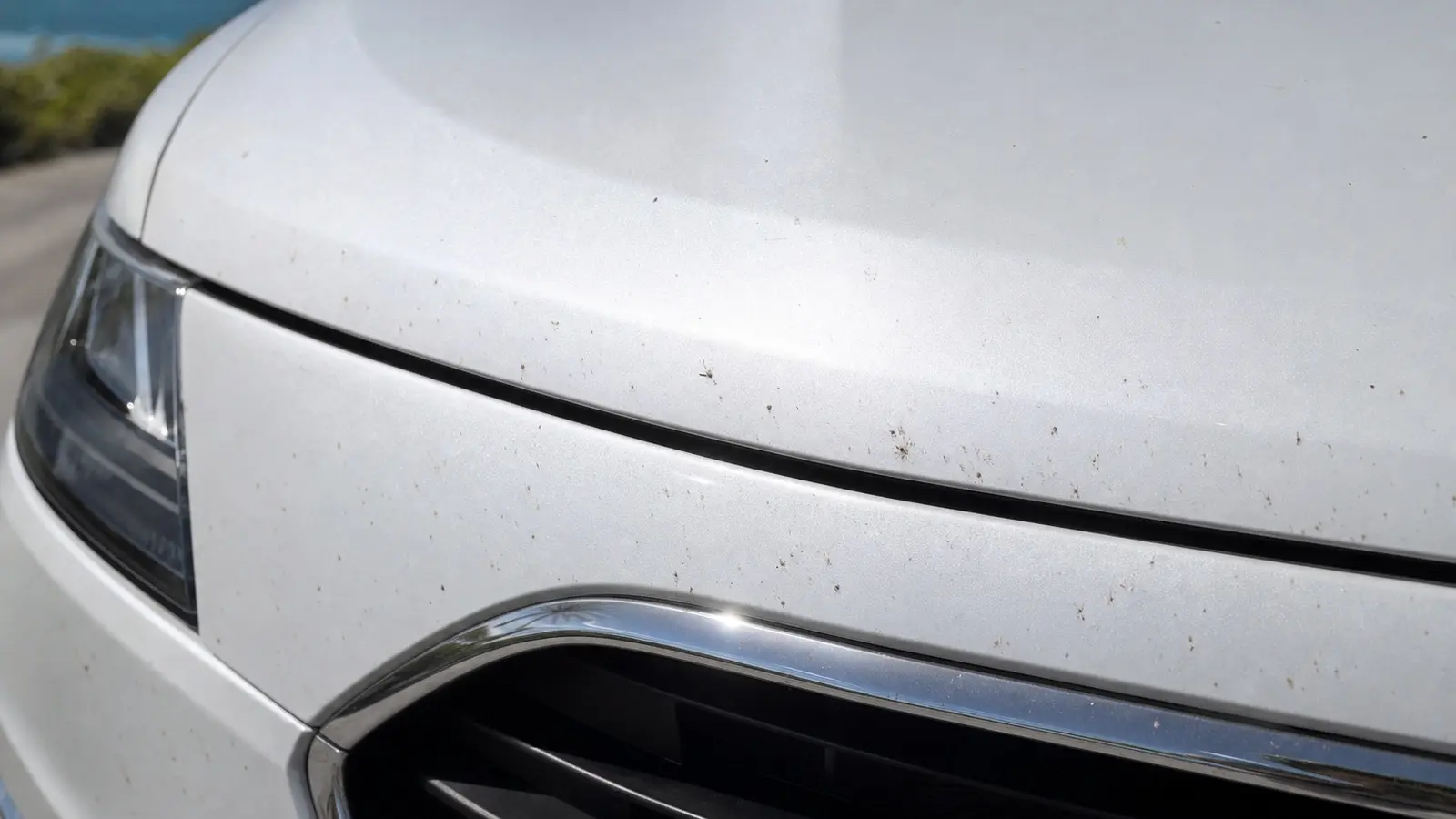
Insect residue concentrates on the front of the car — the leading edge of the hood, the front bumper, and the mirrors — because those surfaces take the direct impact during driving. In the Florida Keys, road trips between islands mean extended exposure at highway speeds. The residue dries quickly in the heat and can bond more firmly to the paint surface over time.
What Not to Do Before Calling Leoserve
The instinct when spotting a large bird dropping on car paint is often to wipe it off quickly. On a hot surface, this is more likely to cause harm than help. Dried bird droppings can contain grit, seed fragments, and crystallized uric acid compounds. Wiping them dry across the clear coat moves abrasive material in contact with the paint finish, which can leave light scratches even if the contamination itself is removed.
The same logic applies to dried insect residue on the hood or bumper. Scraping or rubbing dried insect material without first softening it risks dragging particles across the surrounding paint area. A dry paper towel, dry cloth, or fingernail is not the right first tool for either type of contamination.
If a dropping must be addressed between professional washes, thoroughly soaking the area with water first to soften the material is a safer starting point than rubbing it dry. The goal is to dissolve and float the contamination away, not to scrub it off.
How Leoserve Removes Bird Droppings and Insect Residue
The first step is a thorough DI-water pre-rinse of the full exterior. Deionized water is used because it removes contamination without leaving the mineral deposits that tap water can leave as it evaporates. On areas with visible dried droppings or concentrated insect residue, the pre-rinse gives the water time to penetrate and begin softening the material before the wash mitt ever touches the surface.
After the pre-rinse, foam-cannon soap is applied to the entire exterior. The foam clings to the paint and gives the softened contamination additional time to break down before contact cleaning begins. This is important for bird droppings in particular: a dropping that has been soaked and foamed is significantly easier to remove without marking the surrounding paint than one that is attacked immediately with a wash mitt.
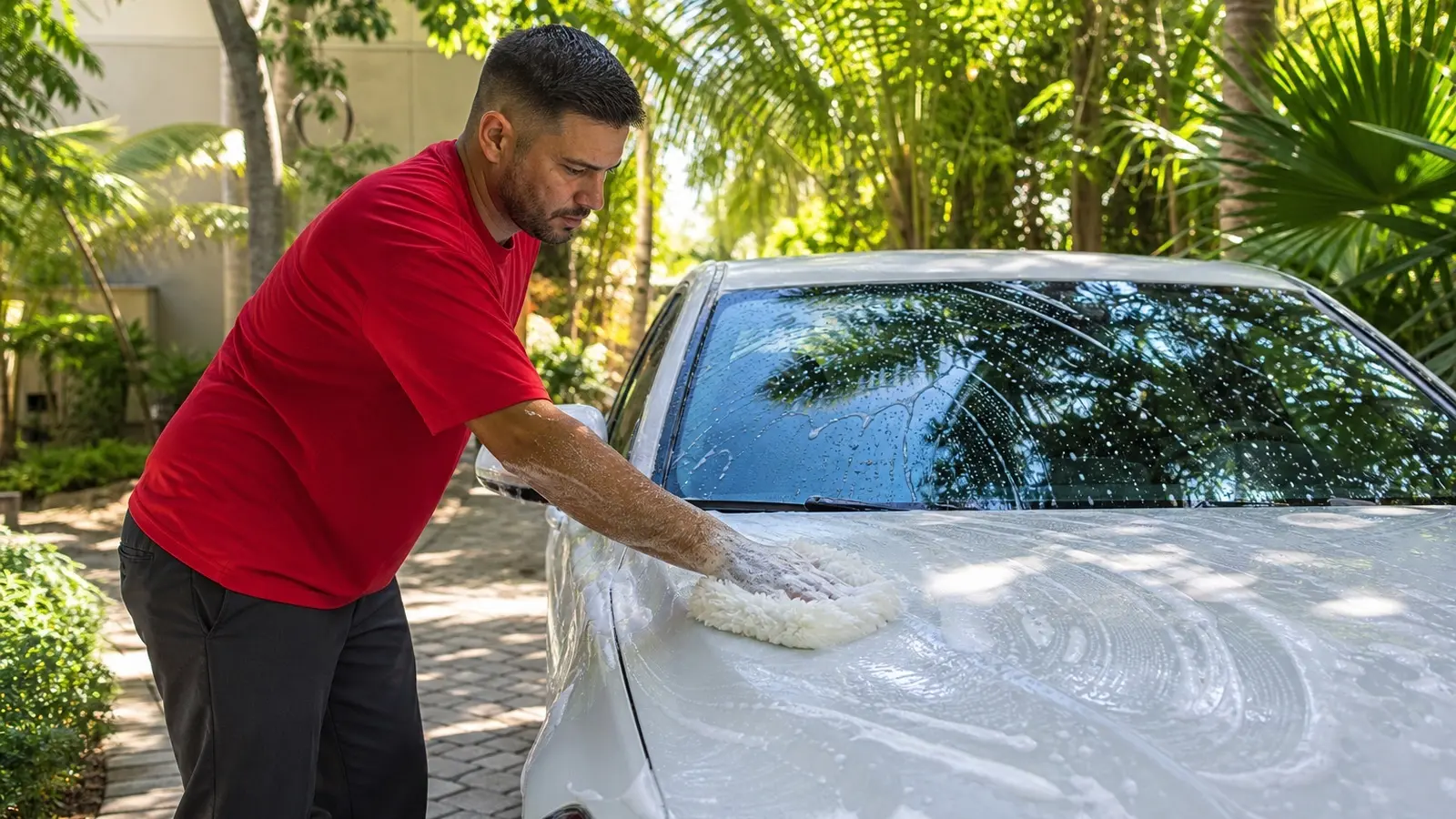
The hand-wash stage uses a wool wash pad, mitt, or car-safe sponge. The wash media is kept well-lubricated with soap throughout and rinsed regularly. Heavily affected areas — the leading edge of the hood, the front bumper, mirror faces — are given deliberate attention with gentle passes rather than heavy scrubbing. The goal is to lift and carry the residue away in the suds rather than to grind it off.
The process finishes with a DI-water final rinse that carries the remaining soap and suspended contamination off the paint. The technician then inspects the treated areas and the surrounding paint before the car is considered complete.
Does Ceramic Coating Help?
Ceramic coating creates a hydrophobic layer over the car’s clear coat that can make it harder for contamination to bond as tightly as it would on uncoated paint. A fresh bird dropping on a properly maintained coated surface may be somewhat easier to remove than the same dropping on bare clear coat. The coating also provides an additional layer between the acidic contamination and the paint beneath it.
Ceramic coating is applied once to the exterior as a one-time treatment. The annual inspection Leoserve recommends is not a reapplication — it is a check to confirm the coating is intact. A coated car still needs prompt attention when droppings or insect residue appear, and still needs the same correct wash process — DI-water soak, foam-cannon soap, wool-mitt hand wash — to remove them. Review Leoserve’s ceramic coating service at https://leoservecleaning.com/ceramic-coating/ for what the service covers.
Mobile Car Detailing Across the Florida Keys
Leoserve provides mobile car washing and detailing from Stock Island across the Florida Keys. For cars that need attention after bird dropping or insect residue accumulation, Leoserve brings the correct process — DI water, foam-cannon soap, and wool-mitt hand washing — to the vehicle’s location. Review Leoserve’s car detailing service at https://leoservecleaning.com/services/car-detailing/ or contact Leoserve at 305-501-8681 through https://leoservecleaning.com/about/contacts/ to request an estimate.
Frequently Asked Questions
Can bird droppings permanently damage car paint in the Florida Keys?
Bird droppings that sit on car paint in direct Florida Keys sun can cause etch marks — dull spots or outlines in the clear coat — particularly on unprotected or older paint. How quickly this happens depends on the paint condition, coating presence, and how long the dropping sits. Prompt, correct removal reduces the risk. An etch mark that has already formed is a separate paint correction issue, not something a standard wash resolves.
Should I try to remove bird droppings myself between washes?
If you need to address a dropping before a professional wash, thoroughly soaking the area with water first — rather than scraping or dry-wiping — reduces the risk of dragging abrasive material across the paint. Avoid dry cloths, paper towels, or any tool applied to the paint before the dropping is fully softened.
Does Leoserve use brushes to remove insect residue from car paint?
No. Leoserve uses wool wash pads, mitts, or car-safe sponges on car paint. Brushes are reserved for appropriate RV exterior surfaces and are not used on car paint or glass, regardless of the type of contamination being removed.
How often should a car in the Florida Keys be professionally washed?
That depends on how the car is used and stored. For cars without biweekly or monthly maintenance service, Leoserve recommends a full interior and exterior detail every 2–3 months. Cars parked outdoors under trees or near water may benefit from more frequent exterior washing given the combination of bird activity, organic debris, and airborne salt in the Florida Keys.