A drive through the Florida Keys can leave an RV front cap covered with insect residue, road film, salt-laden moisture, and grime from wet pavement. The front of the coach takes the first impact from the road, while mirrors, lights, trim edges, and the lower front area collect a different mix of contamination. In strong heat, leaving that residue in place can make the next wash much harder.
Leoserve does not rely on a foam cannon for this work. The process is hands-on: we pre-rinse loose debris, use DI water and pH-neutral soap that is safe for paint, and clean one controlled section at a time with the appropriate brush or wool wash pad. We keep the surface wet, rinse constantly, and repeat the process until the area is clean before moving to the next section.
Quick Summary
- Inspect the RV front cap, mirrors, lights, trim, and lower front area before washing.
- Pre-rinse loose debris before any contact tool touches the surface.
- Use DI water and pH-neutral soap; work in small, wet sections with brushes or wool wash pads as appropriate.
- Remove front-cap insects gently by hand with a purpose-designed bug-removal sponge and tested bug-removal solutions.
- Keep rinsing, repeat as needed, and inspect detail areas before Florida heat dries the surface.
Why the RV Front Cap Collects So Much Residue
The front cap is the RV’s leading surface. On a long motorhome, it is tall, curved, and exposed to insects and airborne road film over a large area. The windshield surround, mirrors, headlights, marker lights, seams, trim, and front graphics or finish can all respond differently to the same trip.
Florida Keys conditions add humidity, salt in the air, strong sun, and frequent wet-road spray. Bug residue can sit on top of that film instead of landing on a clean surface. The process needs to remove loose grit first, soften the remaining contamination, and avoid turning the contact stage into aggressive scrubbing.
Why Hand Bug Removal Matters
Bugs can contain acidic material. When residue is left on a hot front cap, it can etch the clear coat and leave marks or burn-like damage. That is why the front is handled by hand, not treated as a quick spray-and-rinse job.
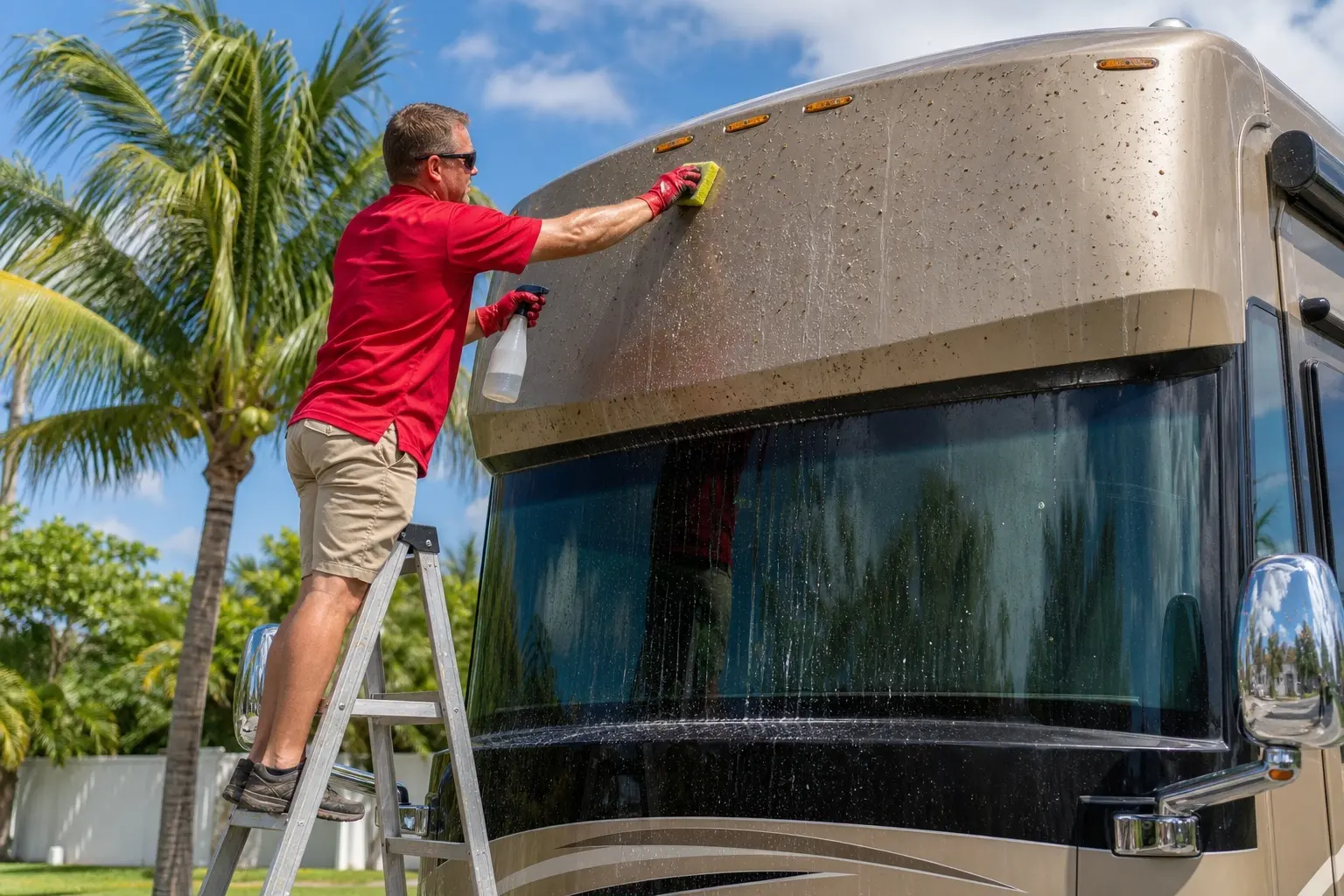
Leoserve uses a purpose-designed bug-removal sponge and bug-removal solutions selected through ongoing product research and testing. The team sprays, gently works, and rinses the affected area inch by inch. For the upper front cap, an A-frame ladder provides careful access. Heat can dry the surface very quickly, so the work area must stay wet throughout the process.
On a heavily affected coach, the front cap alone can require up to an hour of concentrated hand cleaning. The time is determined by the condition of the RV, the amount of residue, access to the upper areas, and the need to protect the finish.
Start With a Careful Front-Cap Inspection
Before rinsing, look for loose trim, damaged sealant, cracked light lenses, chipped areas, lifted graphics, open vents, or accessories that should not receive direct spray. Note where insects are concentrated and where road film is heaviest. The lower front area and mirror housings often need different attention than broad upper panels.
This inspection is not a repair diagnosis. Its purpose is to help the wash process respect the condition of the vehicle. If a fitting, seam, light, or exterior component appears damaged, record it and route it to the correct RV service professional rather than washing as if every surface is intact.
Pre-Rinse Loose Debris Before Contact Cleaning
A thorough pre-rinse moves loose grit, dust, leaves, and road spray off the front cap before contact cleaning begins. Work from upper areas downward and give extra attention to the windshield surround, mirrors, lights, grille openings, lower front panels, and other places where residue collects.
Avoid dry wiping or scraping bug residue. If grit is present, rubbing it across the finish can turn a cleaning step into unnecessary abrasion. The pre-rinse creates a safer starting point and helps show which marks need careful bug-removal work and which may not be ordinary wash residue.
How Leoserve Washes the Rest of an RV
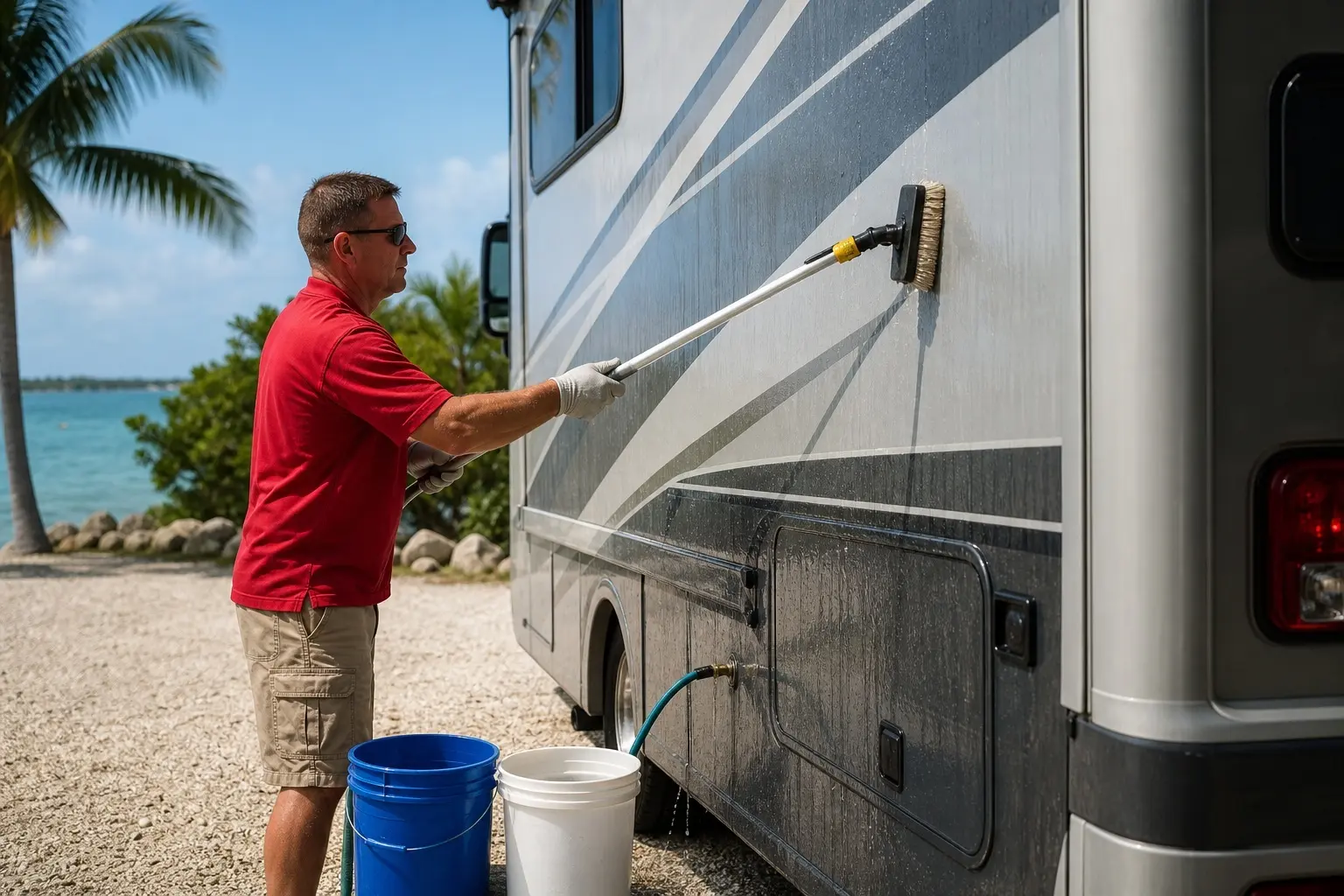
Leoserve washes an RV section by section with buckets of DI water and pH-neutral soap that is safe for paint. Depending on the surface and access, the team uses a suitable brush or wool wash pad, keeps the area lubricated, and maintains a constant rinse. The sequence is simple but deliberate: pre-rinse, gently apply soap and water, lightly scrub, rinse, repeat until clean, then move to the next section.
This is a water-intensive process when the coach needs it. A single RV wash can sometimes use 60 to 90 gallons of water to keep the work controlled, rinse away loosened contamination, and avoid letting soap or residue dry on the surface. Broad panels, trim transitions, lights, mirrors, windows, and graphics are handled as separate areas rather than one uniform surface.
Do Not Treat Every Mark as Bug Residue
After rinsing and hand cleaning, inspect any mark that remains. A stain, chip, etched area, damaged graphic, sealant line, or weathered finish should not be attacked with more scrubbing simply because it sits near the bug-impact zone. Cleaning should reveal the condition of the front cap, not conceal or worsen it.
If the remaining area is not clearly removable wash residue, stop and choose the right next step. That may mean a more specialized detailing assessment or an RV repair professional, depending on what the surface shows.
Use DI Water and Keep the Surface Wet
An RV creates a large drying area, and the front cap combines glass, lights, mirrors, trim, seams, and painted or gel-coated surfaces. Leoserve uses DI water through the wash process and for the final rinse to support a cleaner result and reduce mineral residue as water evaporates.
The final rinse still needs a detail-area check. Water can remain behind mirror housings, around lights, under trim edges, near wipers, and along lower transitions. Give those areas time to drain and inspect them before the RV is parked or the wash is considered finished.
How Ceramic Coating Fits Into RV Front-Cap Care
Ceramic coating can support easier exterior maintenance, but it does not stop insects and road film from reaching the front cap. A coated RV still needs a proper pre-rinse, suitable soap, correct contact tools, and regular inspection. Protective products are not substitutes for washing.
Leoserve treats ceramic coating as a one-time exterior application with annual inspection, not automatic yearly reapplication. Whether coating is appropriate depends on the RV’s finish, current condition, and owner’s maintenance plan.
When Should the Front Cap Be Washed?
The practical answer depends on the trip. A short local move in dry weather may leave less contamination than a highway drive through rain, insects, and road spray. Inspect the front cap after travel and avoid letting a heavy layer sit through repeated cycles of tropical sun and humidity.
If the RV is going into storage, wash it early enough for seams, trim, mirrors, and exterior hardware areas to drain and dry. If it is continuing on the road, a mobile wash can reset the exterior at the vehicle’s location without requiring another trip to a shop.
Mobile RV Washing Across the Florida Keys
Leoserve provides mobile RV washing and detailing across the Florida Keys from its Stock Island base. The service is built around the size, finish, access, and current condition of the motorhome rather than treating it like an oversized car.
Review Leoserve’s mobile RV wash and detailing service at https://leoservecleaning.com/services/mobile-rv-wash-detailing/ or contact Leoserve at 305-501-8681 through https://leoservecleaning.com/about/contacts/ to request an estimate. Airstream owners can also review https://leoservecleaning.com/airstream/ for service information.
Frequently Asked Questions
Should bug residue be scraped from an RV front cap?
No. Begin with a careful pre-rinse, then use a purpose-designed bug-removal sponge and suitable solution by hand. The goal is to soften and remove contamination without dragging grit or using unnecessary pressure on the finish.
Why is hand bug removal important in the Florida Keys?
Bugs can contain acidic material that may etch clear coat when residue is left on a hot surface. The front cap is cleaned inch by inch so the team can keep it wet, use the right solution, and avoid aggressive scrubbing.
How does Leoserve wash an RV?
Leoserve works section by section with DI water, pH-neutral soap, buckets, a suitable brush or wool wash pad, and a constant rinse. The team pre-rinses, gently applies soap and water, lightly scrubs, rinses, and repeats as needed.
Does DI water matter for RV washing?
DI water helps reduce mineral residue across the RV’s large drying area and around glass, mirrors, lights, and trim. It supports a cleaner rinse but does not replace a final inspection.
Will ceramic coating prevent bugs from sticking to an RV?
A coating can support easier maintenance, but it does not stop insects or road film from reaching the surface. Correct washing and annual coating inspection still matter.