
An RV roof is not simply another surface on the exterior. It is the flattest, most moisture-retaining section of the coach, the least visible during normal inspection, and the one most exposed to UV radiation and falling organic debris. In the Florida Keys, those conditions combine with high humidity and airborne salt to create an environment where mold, algae, and oxidized roofing material accumulate between washes faster than in most other climates.
Sidewall washing — even a thorough one — rarely addresses the roof. Water and cleaning products applied from the ground to the sides of a motorhome do not reach the flat top surface in any meaningful way. The roof needs its own step, its own time, and its own tools.
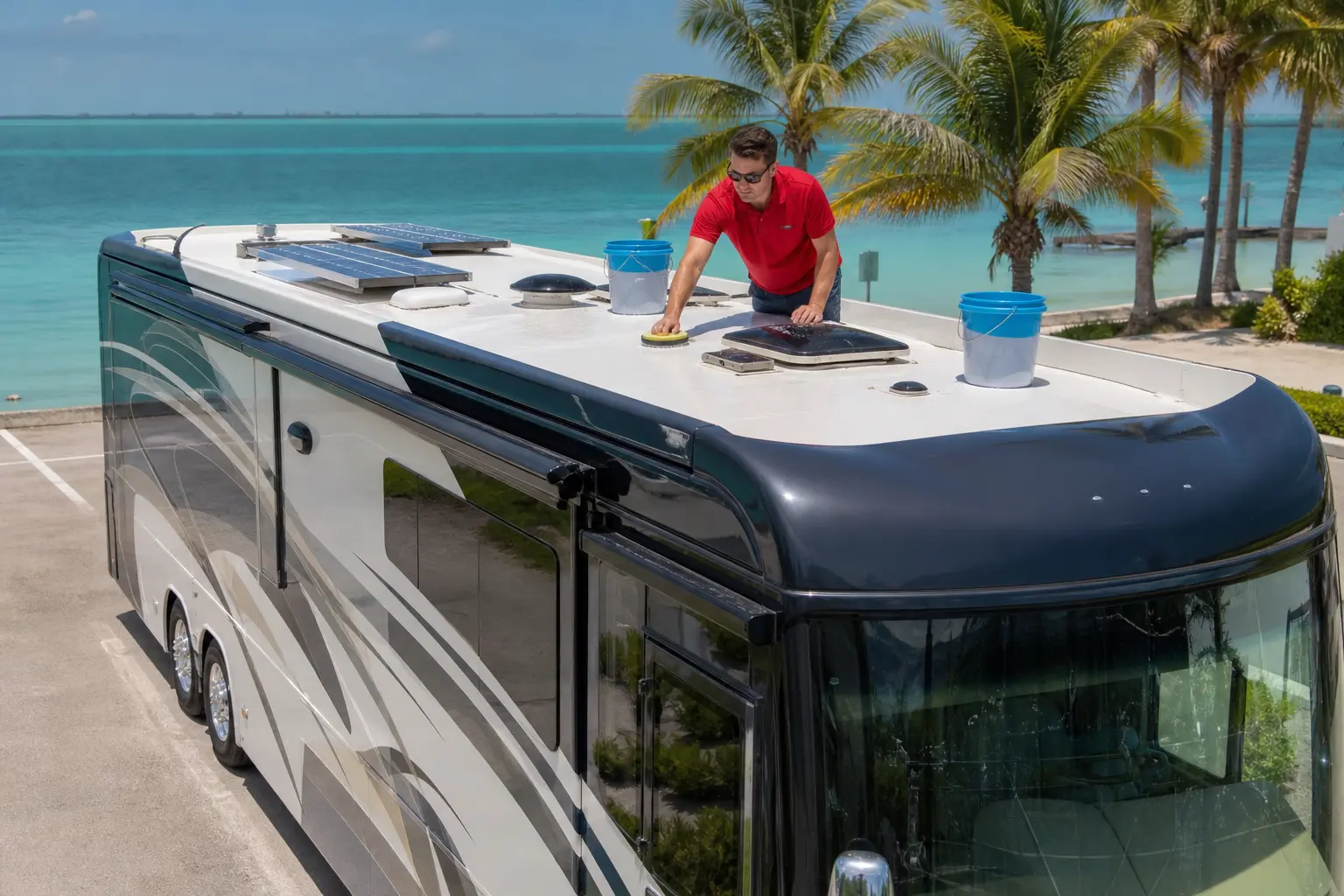
Leoserve cleans RV roofs using buckets of DI water and pH-neutral, paint-safe soap, working section by section and rinsing each area thoroughly before moving to the next. No foam cannon or pressure-washer lance is used. An A-frame ladder provides access to the upper sections where a technician cannot safely reach from the ground.
Quick Summary
- An RV roof accumulates mold, algae, salt, UV-degraded material, and organic debris that sidewall washing does not reach.
- Florida Keys heat, humidity, and airborne salt accelerate biological growth and surface degradation on RV roofs.
- Roof cleaning is a separate step that requires access, time, and tools appropriate for the roofing material.
- Leoserve uses buckets of DI water and pH-neutral soap to clean the roof section by section, rinsing each area before moving to the next.
- No foam cannon or pressure-washer lance is used on the RV roof.
- An A-frame ladder is used for upper sections that cannot be reached safely from the ground.
- Inspect the roof for sealant condition, vent surrounds, AC shrouds, and antenna mounts before and after cleaning.
What Accumulates on an RV Roof in the Florida Keys
Mold and algae are the most visible forms of biological soiling on RV roofs in humid climates. In the Florida Keys, warm temperatures, high humidity, and frequent rain create the right conditions for these organisms to establish and spread quickly on porous or aged roofing material. Algae appears as green or black streaking across the surface; mold can produce a broader, more uniform darkening.
Organic debris is the second category. Leaves, pollen, seed pods, insects, and bird contamination land on the roof and break down slowly in the heat. This organic layer creates a substrate that supports further biological growth and retains moisture longer than a clean surface would.
Salt from the surrounding ocean air settles on the roof just as it does on the sidewalls and front cap. On a flat surface with standing water after rain, salt concentration can be higher than on vertical surfaces where water runs off. This combines with the organic material to accelerate the deterioration of roofing membranes, sealants, and the paint or gel coat of fiberglass roof sections.
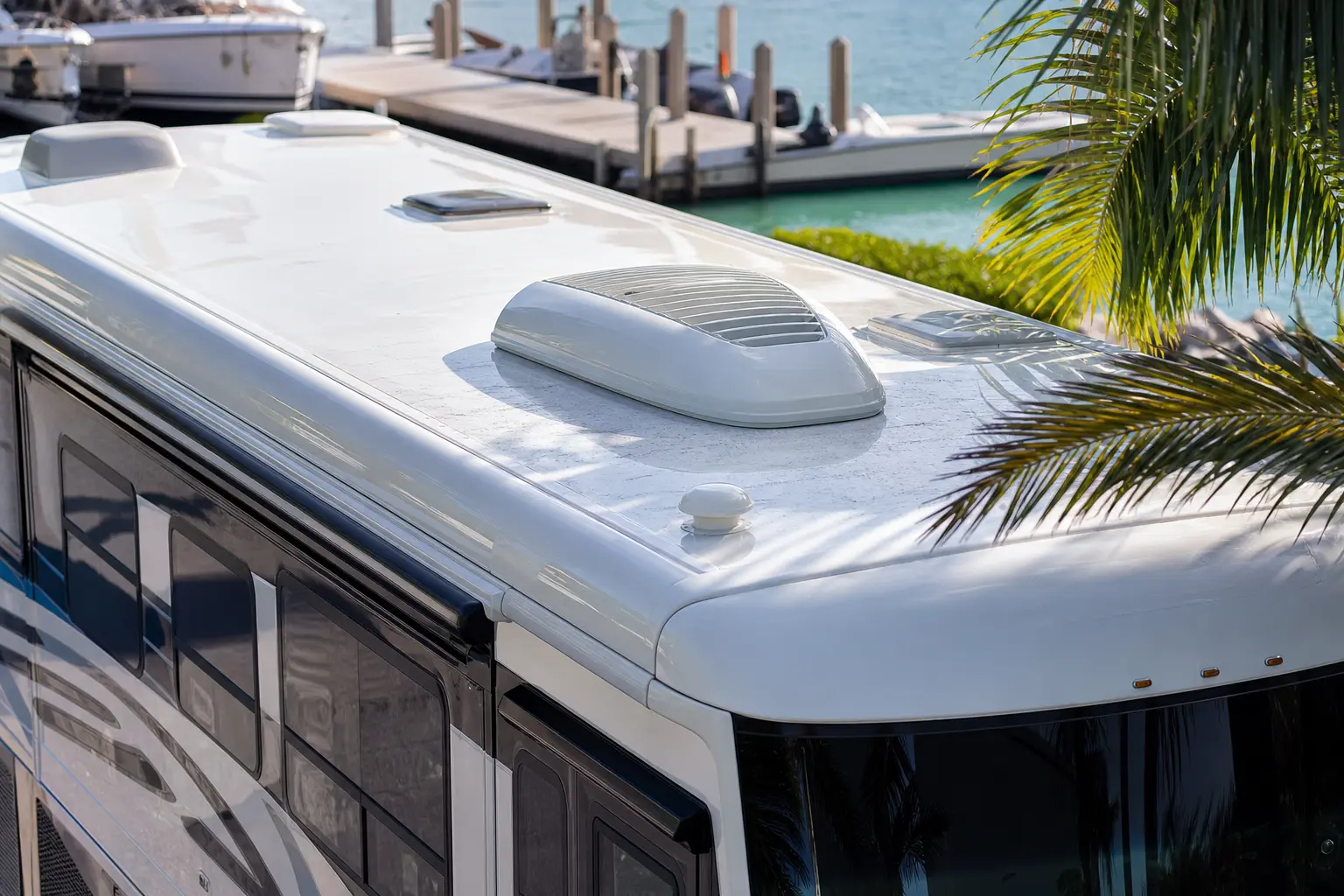
UV degradation is a separate process. Direct sun exposure breaks down the surface layer of rubber, TPO, or fiberglass roofing material over time. This produces a powdery oxidation that is visible as a chalky white film and that can transfer to sidewalls as streaks during rain — the dark roof runoff streaks that appear above windows and slide-out seams on many motorhomes.
Why RV Roof Cleaning Requires Its Own Approach
A flat roof does not drain the way a sidewall does. Water pools in low spots, debris accumulates in corners around vents and AC units, and cleaning products applied from the ground cannot reach the center of the roof at all. Attempting to clean the roof by running a hose from the ground is effective only for the edges and gutter areas, not the flat top surface where most biological growth establishes itself.
The roofing material itself also requires different handling than sidewall paint or gel coat. TPO and rubber membranes can be sensitive to harsh chemicals, abrasive tools, and excessive pressure. Fiberglass roof sections are more durable but can scratch or cloud if the wrong contact tools are used. Using pH-neutral, paint-safe soap and appropriate brushes or wash pads protects the material while removing contamination.
Access is the third consideration. Without a ladder, the center of a large motorhome roof is unreachable. Cleaning only the accessible edges while the center remains contaminated is not cleaning the roof — it is leaving the areas where biological growth concentrates untouched. Safe A-frame ladder access is part of how Leoserve reaches the full roof surface.
How Leoserve Cleans an RV Roof
Before any cleaning begins, Leoserve inspects the roof for conditions that affect how the wash proceeds: damaged sealant around vents, AC shrouds, antenna mounts, and slide-out seams; cracked or lifted roofing membrane; and any open gaps that should not receive direct water. The inspection is not a repair step — it informs the wash approach and identifies anything that needs a qualified RV service technician’s attention.
Loose debris — leaves, seed pods, insects, dried organic material — is removed first, before any wet cleaning begins, so it does not turn into wet contamination that spreads across the surface during the wash.
The roof is then washed section by section using buckets of DI water and pH-neutral, paint-safe soap. Each section is wetted, scrubbed with an appropriate brush or wash pad to loosen biological growth and oxidized material, and rinsed thoroughly before the next section begins. Working in sections prevents contaminated water from running across areas that have already been cleaned.
The DI water used for rinsing removes soap and suspended contamination without leaving the mineral deposits that tap water can leave on a large flat surface exposed to direct sun. On an RV roof, mineral spotting from hard-water rinse water is visible and persistent.
After the field of the roof is clean, Leoserve gives additional attention to the areas around vents, AC units, antenna mounts, and the front and rear edges where debris and biological growth concentrate. These transition areas hold more contamination than the open roof surface and require slower, more deliberate cleaning.
What Happens at the Roof Edges
The front edge and rear corners of the roof are where the most visible exterior damage often begins. Water that does not drain properly from the roof edges carries dissolved oxidation products and biological material down the sidewalls. On a motorhome that has not had the roof cleaned regularly, those runoff streaks darken above windows, around slide-out frames, and on the front cap.
Cleaning the roof reduces the source of that runoff. Once the roof surface is clean, the water that runs off it during rain is significantly cleaner, which reduces the rate of new sidewall streaking. Sidewall washing alone addresses the stains that are already there, but it does not address the roof that keeps producing them.
How Often an RV Roof Needs Cleaning in the Florida Keys
The right interval depends on how the RV is used and stored. An RV parked outdoors under trees in the Florida Keys will accumulate organic debris and biological growth faster than one stored in a covered facility or used actively. A full-time RV lifestyle means more road contamination and heat exposure but also more frequent water contact from driving through rain.
As a general starting point, an RV roof that is used or stored outdoors in the Florida Keys benefits from cleaning at least as often as the rest of the exterior receives a full wash. For an RV that sits in storage for weeks or months at a time, inspection and cleaning before each extended trip is reasonable practice. Biological growth that is allowed to become deeply established takes more time and effort to remove than contamination addressed while it is still relatively fresh.
Mobile RV Roof Cleaning Across the Florida Keys
Leoserve provides mobile RV washing and detailing across the Florida Keys from its Stock Island base. The service is planned around the RV’s size, roofing material, access requirements, and current exterior condition. Review Leoserve’s mobile RV wash and detailing service at https://leoservecleaning.com/services/mobile-rv-wash-detailing/ or contact Leoserve at 305-501-8681 through https://leoservecleaning.com/about/contacts/ to request an estimate. Airstream owners can also review https://leoservecleaning.com/airstream/ for service information relevant to aluminum exterior care.
Frequently Asked Questions
Does Leoserve use a foam cannon or pressure washer on the RV roof?
No. Leoserve cleans RV roofs using buckets of DI water and pH-neutral, paint-safe soap with appropriate brushes or wash pads. No foam cannon or pressure-washer lance is used on the roof surface.
How is the center of the roof reached?
Leoserve uses an A-frame ladder to access upper sections of the roof that cannot be reached safely from the ground. The roof is cleaned section by section to ensure the full surface is addressed, not just the accessible edges.
What causes the dark streaks running down RV sidewalls?
Dark sidewall streaks typically come from oxidized roofing material, biological growth residue, and organic debris that washes off the roof during rain and runs down the sidewalls. Cleaning the roof reduces the source of the runoff that causes sidewall streaking. Sidewall washing addresses existing stains but does not prevent new ones if the roof itself is not also cleaned.
Does cleaning the RV roof damage sealant or vents?
Leoserve inspects the roof before cleaning and avoids direct cleaning of areas with damaged or open sealant. Damaged sealant around vents, AC units, and seams needs attention from a qualified RV service technician before water cleaning — not during it. A pre-wash inspection is part of how Leoserve identifies those conditions.
Is DI water necessary for roof rinsing?
On a large flat surface exposed to direct sun, mineral-containing tap water can leave visible spotting as it evaporates. DI water rinses the surface without leaving those deposits, which matters on a roof that dries quickly under Florida Keys sun. Leoserve uses DI water throughout the wash process, including for roof rinsing.