
A controlled wash in morning shade helps keep a Florida Keys vehicle cooler while DI water, foam-cannon soap, and proper hand-wash media remove salt and surface film.
Florida Keys summer combines a high UV index, daily salt air, and elevated humidity over an extended season. Together those conditions affect every unprotected car exterior. Paint oxidizes, clear coat dulls, and uncleaned salt residue creates an environment where surface degradation accumulates between washes. The right protection approach—correct washing and, when appropriate, a one-time ceramic coating—works differently in Keys conditions than in a cooler or less coastal climate.
Leoserve’s car-wash process uses deionized (DI) water for the pre-rinse, in the foam cannon, and for the final rinse. Soap is applied with a foam cannon, then the car is hand- washed with a wool wash pad, mitt, or car-safe sponge. Brushes are not used on car paint. This process supports paint condition through the summer months regardless of whether a ceramic coating has been applied.
Quick Summary
- Florida Keys summer UV and salt air accelerate paint oxidation and surface wear on unprotected finishes.
- Ceramic coating is a one-time exterior application that adds a protective layer; it requires annual inspection, not yearly reapplication.
- A coated car still needs correct washing: DI-water pre-rinse and final rinse, foam- cannon soap, wool wash pad or mitt.
- Brushes are reserved for RV exterior surfaces and are not used on car paint.
- Interior detailing is separate from ceramic coating and exterior washing.
- Without biweekly or monthly maintenance, a full detail every 2–3 months keeps the interior and exterior at a proper baseline.
What Florida Keys Summer Heat Does to Car Paint
UV intensity in the Florida Keys is high year-round, but summer brings longer periods of direct exposure and higher ambient temperatures. Paint absorbs heat differently than it does in moderate climates. Prolonged UV exposure can break down clear coat, fade pigment, and create surface oxidation that starts as a slight dullness and deepens over time. A car parked without shade or regular washing gives those conditions more time to work undisturbed. The surface may appear clean after rain, but saltwater evaporation and road film remain on the finish.
Washing removes the accumulated layer of salt, insects, sand, and organic film that builds between appointments. A clean surface is easier to inspect, easier to protect, and more responsive to any treatment. A surface allowed to carry contamination through a Florida Keys summer requires more work to restore and may develop staining or paint damage that a wash alone cannot reverse.
Salt Air Adds Consistent Surface Exposure
Salt is not a beach-day concern only in the Florida Keys. Salt particles carried in the air settle on exterior surfaces between washes, sometimes before a car has been driven at all. On a paint surface without a coating or regular washing, salt residue can combine with moisture and UV to accelerate corrosion risk on metal trim, edges, seams, hinges, and exposed metal surfaces around glass and wheel openings.
Frequent washing is the most direct response. A thorough DI-water rinse removes loose salt before foam and contact cleaning begins. The wool wash pad, mitt, or car-safe sponge removes the film that the rinse cannot reach alone. Salt washed off before it has time to interact with heat and humidity causes less damage than salt allowed to sit through repeated cycles of dew and sun.
What Ceramic Coating Actually Does
Ceramic coating creates a chemically bonded exterior layer on top of the clear coat. The coating is hydrophobic, meaning water and some contamination run off or bead more readily than on uncoated paint. UV-blocking properties in the coating reduce direct UV penetration into the paint layers beneath it. On a properly prepared surface, a well- applied ceramic coating adds measurable exterior protection that ordinary waxes and sealants do not replicate.
Leoserve treats ceramic coating as a one-time exterior application. After application, the coating requires an annual inspection—not yearly reapplication—to verify it is intact and performing as intended. Conditions that could degrade the coating over time include heavy scratching, chemical exposure, and contact with abrasive products. Annual inspection is also the point at which any developing surface condition can be identified and addressed before it affects the paint beneath the coating.
What Ceramic Coating Does Not Do
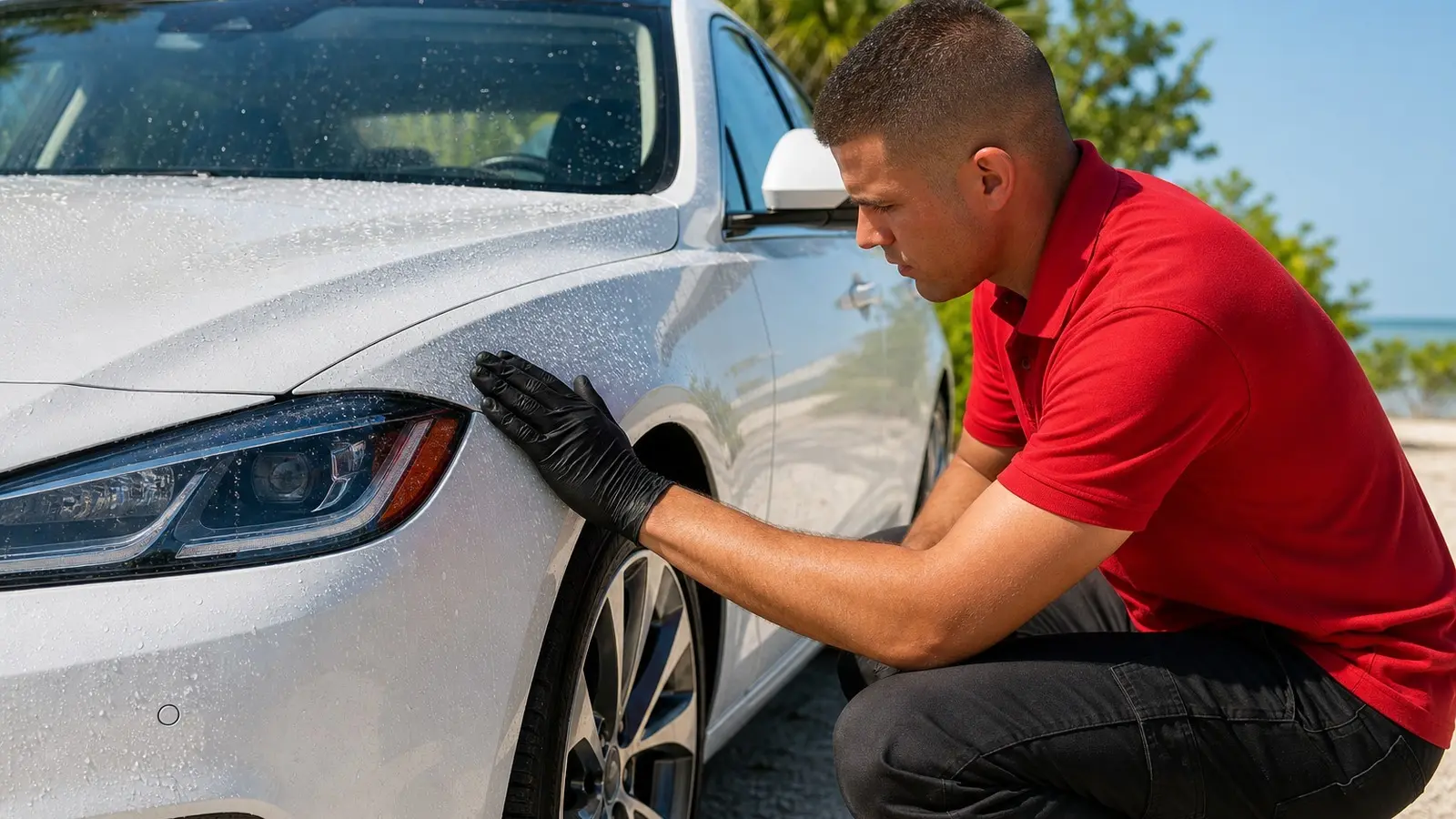
Ceramic coating requires annual inspection, not yearly reapplication. The inspection confirms the coating is intact and reveals any surface conditions that need attention before they affect paint beneath.
A ceramic coating does not make a car self-cleaning. Salt, insects, road film, bird residue, and summer pollen still reach the surface. A coated car still collects contamination and still needs correct washing at the appropriate interval. The coating reduces how tightly some contamination bonds to the surface, but it does not prevent that contamination from landing or building up.
Ceramic coating protects exterior surfaces only. It does not extend to the interior. Sand in the carpets, sunscreen transfer on seat fabric and steering wheel materials, dashboard UV exposure, and cabin odors all require separate interior detailing. A car that has ceramic coating applied and receives no interior maintenance is protecting one part of the vehicle while neglecting the rest. Review Leoserve’s ceramic coating service at https://leoservecleaning.com/ceramic-coating/ for what the service includes.
Washing a Ceramic-Coated Car in the Florida Keys
The wash process for a ceramic-coated car follows the same sequence as any correct car wash: DI-water pre-rinse, foam-cannon soap, hand-wash with a wool wash pad, mitt, or car-safe sponge, and a DI-water final rinse. The coating is not a reason to use a brush, reduce soap contact time, or skip the pre-rinse. Abrasive tools and grit dragged across the coating surface can scratch it the same way they can scratch unprotected paint.
Maintaining the correct wash routine supports the coating rather than wearing it down.
Harsh chemicals, abrasive wash media, and contact washing before a thorough rinse are the conditions most likely to reduce the life and performance of a ceramic coating over time. The coating is an addition to the exterior surface, not a replacement for the care that surface requires.
When a Full Detail Is Still Needed
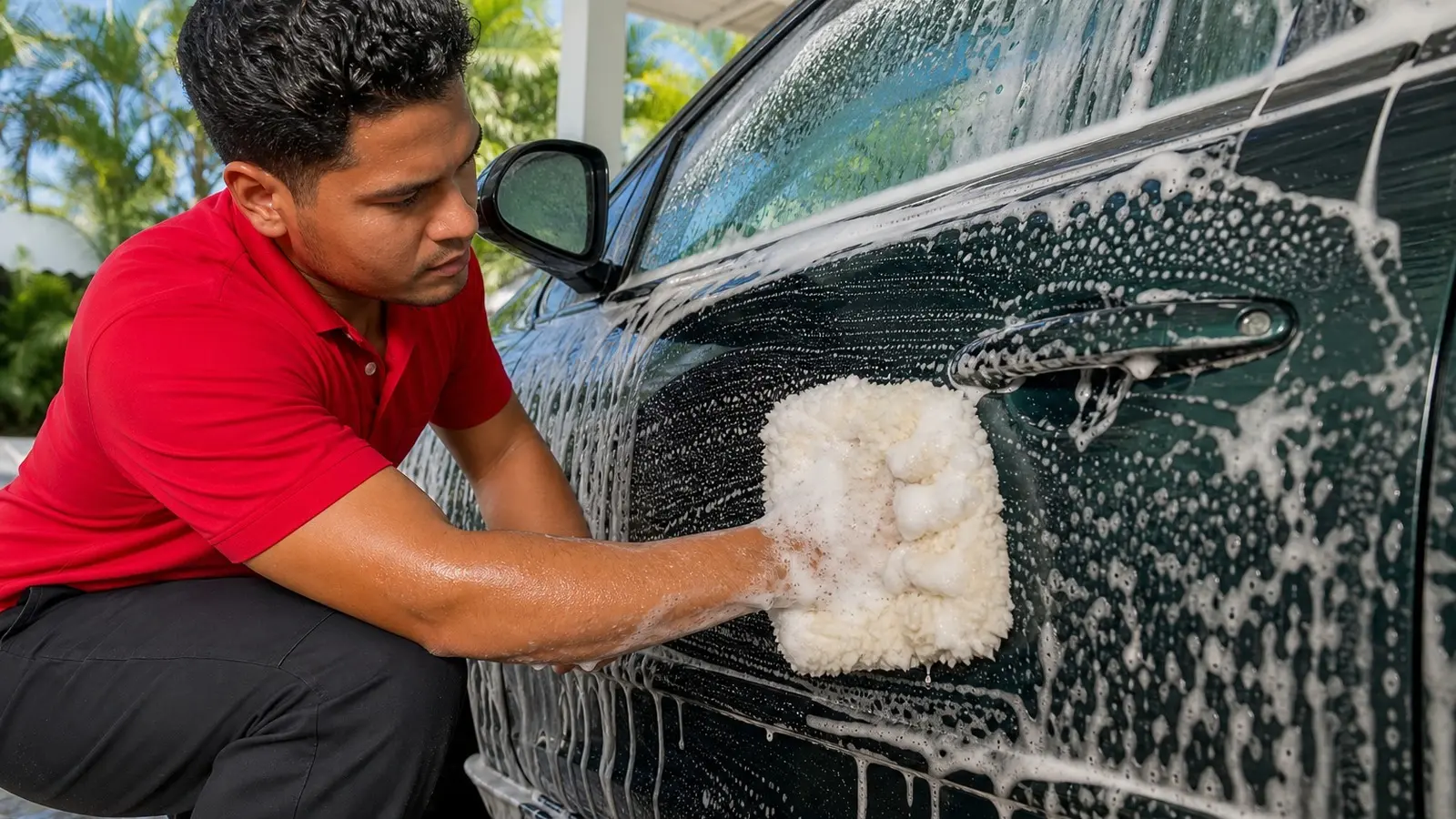
Whether or not a car carries ceramic coating, the correct wash sequence remains the same: DI-water pre-rinse, foam-cannon soap, and hand-washing with a wool wash pad, mitt, or car-safe sponge. Brushes are not used on car paint.
Exterior washing and ceramic coating care are not substitutes for a full interior and exterior detail. Interior surfaces accumulate contamination that no exterior treatment addresses. Without biweekly or monthly maintenance service, Leoserve recommends a full detail every 2–3 months. The interval depends on use. A daily driver in high-traffic Keys conditions may need attention sooner. A vehicle stored under cover and used infrequently may need it less often.
A full detail also covers paint correction, trim conditioning, glass cleaning, and a more thorough inspection than an exterior wash provides. If a vehicle has been through a Florida Keys summer with limited attention, the detail appointment is where staining, surface film, trim damage, or other developing conditions are identified and addressed rather than left to worsen. Review Leoserve’s car detailing service at https://leoservecleaning.com/services/car-detailing/ for what a full detail includes.
Mobile Car Detailing and Ceramic Coating Across the Florida Keys
Leoserve provides mobile car detailing and ceramic coating application across the Florida Keys from its Stock Island base. Mobile service means the appointment is planned around the vehicle’s location, available shade, and current condition rather than requiring the car to be driven to a shop. Contact Leoserve at 305-501-8681 through https://leoservecleaning.com/about/contacts/ to request an estimate or ask which service fits the vehicle’s current state.
Frequently Asked Questions
Does ceramic coating eliminate the need to wash a car regularly in the Florida Keys?
No. A coated car still collects salt, insects, road film, and other contamination. The correct wash sequence—DI-water pre-rinse, foam-cannon soap, wool wash pad or mitt, DI final rinse—still applies and helps maintain the coating alongside the paint beneath it.
How often does a ceramic coating need to be inspected?
Leoserve recommends annual inspection. The inspection confirms the coating is intact, identifies any developing surface conditions, and determines whether any localized attention is needed before those conditions affect the paint beneath.
Can the pre-rinse step be skipped when washing a coated car?
No. The DI-water pre-rinse removes grit and loose contamination before any contact tool touches the surface. Skipping it risks dragging particles across the coating, which can cause scratching regardless of the coating’s presence.
Does ceramic coating protect car interiors from Florida Keys summer conditions?
No. Ceramic coating is an exterior application only. Interior surfaces—carpets, seat fabric, dashboard, steering wheel, and cabin materials—need separate detailing to address the contamination, UV exposure, and humidity effects that build up inside the vehicle.